Introduction
Just two decades ago, Amazon introduced the first major public cloud service—establishing the paradigm that organizations could access digital infrastructure dynamically without directly procuring physical hardware and data center assets. Today, cloud computing serves as the foundational utility underpinning the modern digital economy.
However, as cloud computing reaches enterprise maturity, the focus of innovation has transitioned from raw infrastructure provisioning toward intelligence, automation, and strategic value delivery. The year 2026 represents a pivotal inflection point: the era of viewing the cloud merely as a remote hosting destination is giving way to an ecosystem characterized by self-orchestration, deep artificial intelligence integration, and direct business value creation.
This article provides a comprehensive evaluation of key cloud computing trends in 2026, examining AI-driven architectural shifts, cloud financial dynamics, evolving regulatory mandates, and emerging deployment models.
A New Dimension for AI: Cloud as an Intelligent Core
Optimization of AI Infrastructure
Over recent years, enterprise investments focused heavily on establishing baseline cloud infrastructure for artificial intelligence. In 2026, these initiatives have transitioned from experimental pilots into production-grade deployments, shifting primary operational focus toward infrastructure optimization.
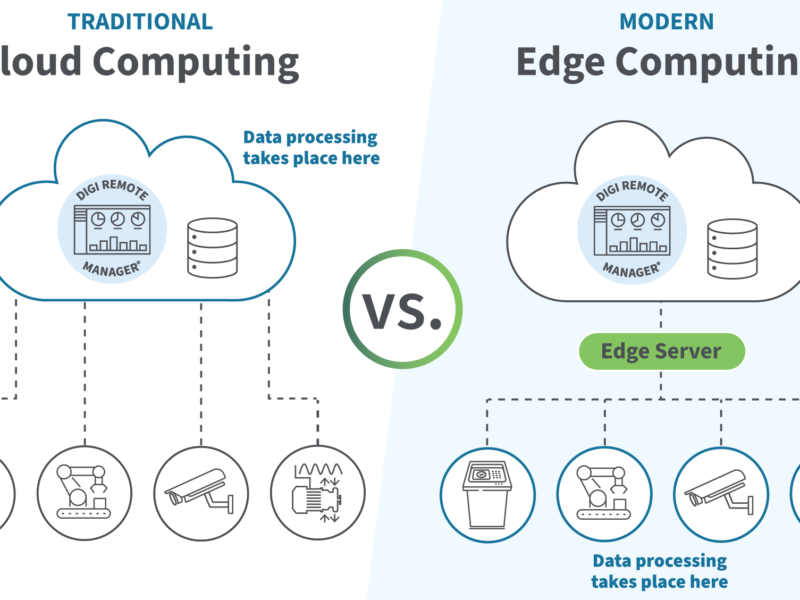
Organizations are actively maximizing GPU and specialized hardware utilization rates to improve return on investment (ROI). Optimization efforts include refining model efficiency to reduce compute overhead and shifting AI inference tasks to the network edge to minimize latency and improve overall operational performance.
AI as a Service (AIaaS)
Maintaining full, bespoke cloud environments for proprietary AI stack operations is not always optimal for every enterprise scenario. AI as a Service (AIaaS) has emerged as an efficient alternative, enabling businesses to integrate pre-trained AI models and managed AI capabilities provided by specialized vendors.
This model allows organizations to delegate the operational complexity of designing, deploying, and maintaining specialized AI infrastructure to third-party providers. Except for entities requiring highly custom model architectures, AIaaS delivers a streamlined, cost-effective deployment path.
Agentic AI and Agent Meshes
A defining trend in 2026 is the rapid adoption of Agentic AI—systems capable of autonomous decision-making, task execution, and multi-agent collaboration. This paradigm introduces a new architectural component within cloud environments: the AI Agent Mesh.
The agent mesh serves as an infrastructure coordination layer connecting AI agents and foundational models, providing critical operational capabilities:
- Tracking agent status and execution states across enterprise environments.
- Enforcing governance rules, such as restricting unauthorized data sharing between independent agents.
- Mitigating cybersecurity risks by preventing unauthorized access to sensitive data stores.
- Optimizing operational costs by routing requests to resource-efficient models where appropriate.
The Evolution of Post-Web Architectures
Traditional vertical layers within the cloud software stack are undergoing structural consolidation. Large Language Models (LLMs) accelerate this process, as single API calls can consolidate capabilities previously distributed across four or five distinct cloud-native architectural layers.
Consequently, procurement paradigms are evolving from traditional resource-based pricing toward token-based utilization models. Cloud providers now differentiate their offerings across three primary layers:
- AI Cloud Infrastructure: Multi-tenant AI Infrastructure as a Service (IaaS) alongside dedicated physical compute resources.
- Model as a Service (MaaS): Managed model production, fine-tuning, and inference hosting services.
- Agent as a Service (AaaS): Managed platforms supporting autonomous agent deployment and workflow execution.
Emerging Cloud Models: Neoclouds, Private Environments, and Micro Edges
Neoclouds: Specialized GPU Infrastructure Providers
Alongside traditional hyperscalers (AWS, Azure, GCP), a specialized category of providers—termed “Neoclouds”—has established a strong market presence. GPU-first providers such as CoreWeave, Lambda, and Nebius offer infrastructure engineered specifically for high-density AI and machine learning workloads.
Forrester projects that neoclouds will generate $20 billion in revenue in 2026, capturing market share in specialized generative AI compute. Backed by venture capital and hardware partnerships, these providers continue to expand globally while integrating open-source AI frameworks and specialized infrastructure capabilities.
Private and Sovereign Cloud Environments
In response to public cloud security requirements, cost predictability, and data lock-in considerations, organizations are placing renewed emphasis on controlled cloud architectures.
Adoption of private cloud environments continues to grow—a Broadcom survey indicates that 53% of senior IT decision-makers prioritize building new workloads within private cloud architectures. Simultaneously, sovereign clouds are seeing increased deployment to satisfy strict regulatory, data privacy, and jurisdictional mandates—particularly within finance, education, healthcare, and pharmaceutical sectors.
Forrester estimates that at least 15% of enterprises in 2026 will leverage private AI deployments hosted on private cloud infrastructure to maintain strict control over proprietary corporate data.
Micro Cloud Edge Deployments
The micro cloud edge model combines localized edge deployments with centralized cloud management. Edge locations utilize compact, pre-configured hardware running containerized software stacks ready for rapid deployment. By processing data locally and cost-effectively at the edge, this architecture provides organizations with effective options for optimizing bandwidth and transit costs.
Hybrid and Multi-Cloud Ecosystems
Hybrid cloud configurations represent the primary deployment model for 73% of organizations. In parallel, multi-cloud strategies remain widely adopted to reduce vendor lock-in, improve operational redundancy, and optimize workload placement across providers.
Cost Economics and FinOps Management
Cloud Expenditure and Waste Mitigation
Global expenditure on cloud infrastructure continues to reach record levels in 2026. Gartner reports that Australian organizations alone are projected to spend A$33.6 billion on public cloud services in 2026, representing a 17.9% year-over-year increase. Globally, cloud infrastructure expenditure reached $128.6 billion in Q1 2026, up 35% compared to the prior year period.
However, operational data highlights an ongoing challenge: unoptimized or wasted cloud expenditure reached 29% in 2026, reversing a five-year downward trend. This indicates that nearly one-third of overall cloud expenditure remains inefficiently allocated.
Primary Drivers of Increasing Cloud Costs
Several macro factors contribute to rising cloud expenditure:
- Increased energy and power consumption costs associated with high-density AI data centers.
- Escalating capital costs for specialized hardware infrastructure.
- Expanding feature sets and service integration demands from enterprise consumers.
Institutionalization of FinOps and Cloud Centers of Excellence (CCOE)
To address expenditure management, organizations are institutionalizing governance frameworks. Dedicated FinOps teams are now deployed across 63% of enterprises. Similarly, 71% of organizations have established a Cloud Center of Excellence (CCOE) to align technical cloud operations with broader financial and strategic goals.
Regulatory Mandates and Security Governance
Evolving Compliance Frameworks
Regulatory compliance for cloud operations has become increasingly complex in 2026. The European Union’s AI Act reached full enforcement in August, establishing strict compliance standards governing data pipelines powering AI applications. Additionally, state-level AI regulations in the U.S. (including frameworks in Colorado and Indiana) alongside the enforcement of the EU Product Liability Directive in late 2026 require comprehensive compliance monitoring.
Data localization laws continue to impact global cloud footprints. Jurisdiction-specific residency mandates require providers to deploy redundant infrastructure and isolated logical environments, adding operational complexity and overhead.
Security Monitoring and Observability
Maintaining uniform security policies across multi-cloud and on-premises environments remains a key operational priority. Enterprise IT departments are focusing on updating security policies and deploying cloud-native security controls.
Advanced observability tools have become essential components of modern cloud operations. Unlike traditional network monitoring utilities, comprehensive observability platforms provide deep visibility across multi-cloud transaction workflows, system logs, containerized microservices, and potential security anomalies.
Market Landscape and Provider Positions
Hyperscaler Capital Expenditure
Major hyperscalers continue to allocate significant capital expenditure toward infrastructure expansion in 2026:
- AWS projects capital investments reaching $200 billion through 2026.
- Microsoft Azure reported quarterly capital expenditure reaching $37.5 billion.
- Google Cloud adjusted its 2026 capital expenditure guidance to $175–185 billion.
In Q4 2025, worldwide cloud infrastructure service spending reached $110.9 billion, representing a 29% year-over-year increase.
Provider Market Share Distribution
According to 2026 CIO survey data, Microsoft Azure maintains strong preference metrics among enterprise technology leaders, with 55% listing Azure as their primary cloud provider. However, AWS retains overall market leadership with a 32% market share as of Q4 2025, followed by Azure at 22%.
Regional Growth Trajectories
North America accounted for 24.18% of the global cloud market share. The Asia-Pacific region continues to lead growth metrics with a projected CAGR of 21.65%. Local providers such as Alibaba Cloud and Tencent Cloud maintain strong positions in China, while global providers expand infrastructure across Japan, South Korea, India, and ASEAN markets.
Strategic Outlook: The Next Phase of Cloud Evolution
Cloud computing in 2026 has entered what industry analysts term the “Value Era”—a phase where organizational success depends on aligning technological capabilities with clear business outcomes.
Gartner notes that rapid capital allocation toward data center systems and IaaS AI infrastructure reflects one of the largest sustained infrastructure buildouts in modern technical history.
Core Strategic Imperatives:
- AI Integration as Core Infrastructure: Agentic AI, AIaaS, and AI-native architectures represent baseline technical standards.
- Governance and Cost Control: Formalized FinOps and CCOE frameworks are essential operational requirements.
- Diversified Deployment Models: Neoclouds and sovereign private clouds offer viable alternatives to traditional public cloud paradigms.
- Regulatory Alignment: Regional compliance and data sovereignty mandates dictate global cloud architecture designs.
Conclusion
The future of cloud computing is characterized by intelligent, autonomous systems focused on business value creation. Beyond serving as raw infrastructure, the cloud functions as an overarching operating environment driving modern enterprise workflows.
As Gartner analysts highlight, market expansion is accompanied by tight IT budgets, hardware supply constraints, evolving memory costs, and shifting AI investment priorities.
Navigating this evolving landscape requires organizations to continuously align technical architectures with changing economic and regulatory realities. Entities that successfully integrate these cloud trends will build resilient, adaptable digital infrastructure for the future.