Introduction: An Enigma Hidden in the Desert
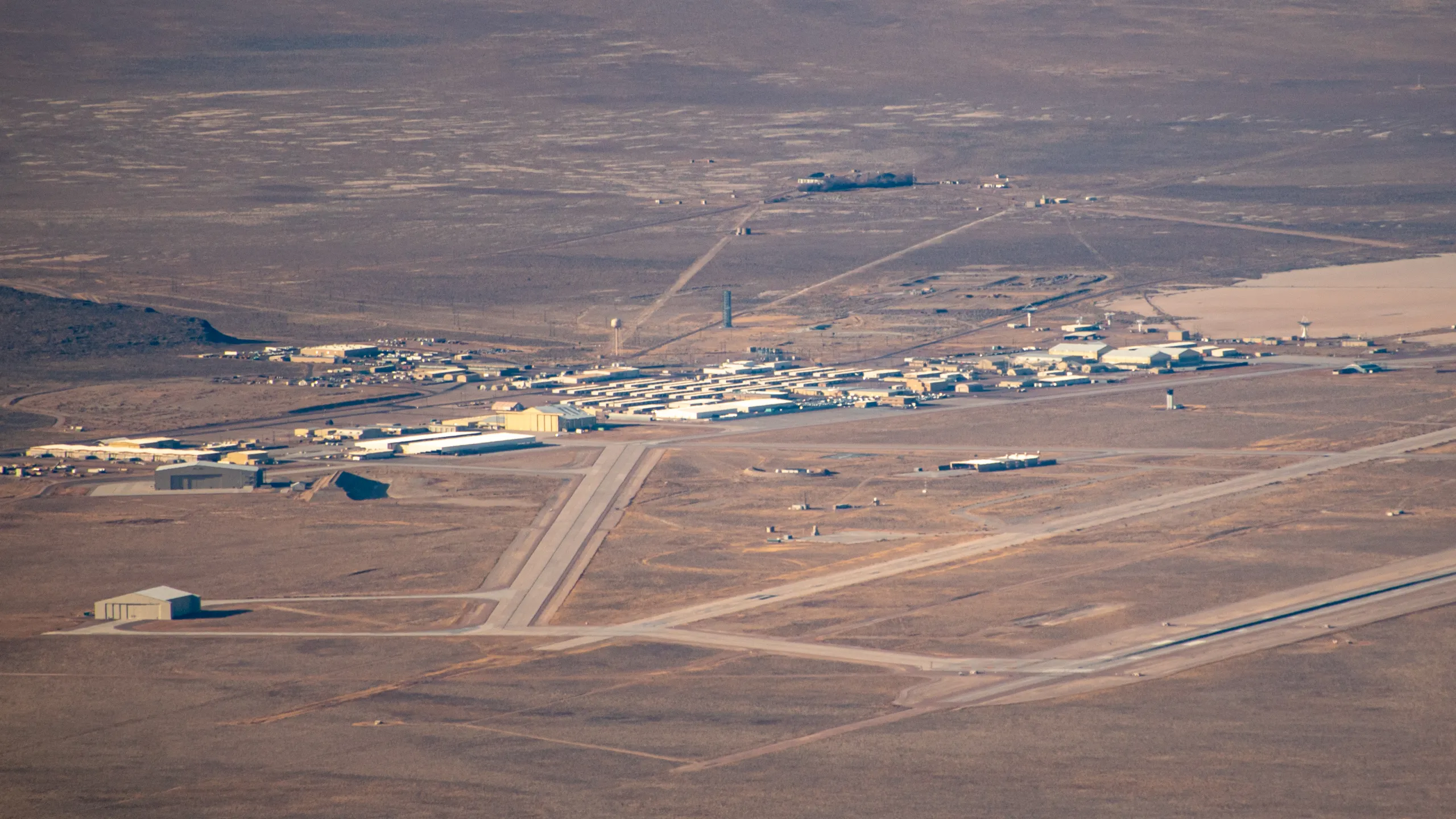
Across the vast, desolate expanses of the Nevada desert—punctuated by Joshua trees and barren dry lakebeds—lies a military installation that has captured the global imagination for generations: Area 51. Officially classified as a highly restricted United States Air Force facility, the site has become culturally synonymous with extraterrestrial recovery, reverse-engineered technology, and deep-seated government secrecy. What began as a covert Cold War proving ground for aerial reconnaissance platforms targeting the Soviet Union evolved into the world’s most famous focal point for rumors regarding non-human intelligence and off-world technology.
This comprehensive analysis examines the historical origins, declassified records, and enduring folklore surrounding Area 51. By evaluating official Central Intelligence Agency (CIA) documents alongside controversial whistleblower claims and contemporary political developments, this article separates verifiable aviation history from the persistent myths that continue to shroud Groom Lake.
Historical Background: Proving Ground for Reconnaissance Aircraft
Area 51 was established at the height of Cold War tensions in 1955. The Central Intelligence Agency selected the remote salt flat adjacent to Groom Lake, Nevada, as an isolated testing environment for the Lockheed U-2 high-altitude reconnaissance aircraft under Project AQUATONE. Designated on official government charts as “Area 51,” the extreme operational security surrounding the facility was designed specifically to shield military technology from Soviet satellite surveillance and signal intelligence.
Declassified CIA historical records confirm that the installation served primarily as an advanced flight-testing center for experimental military platforms rather than a storage facility for extraterrestrial artifacts. Following the U-2 program, the site hosted tests for the A-12 OXCART, the SR-71 Blackbird, and later stealth aircraft such as the F-117 Nighthawk.
High-Altitude Operations and the Surge in UFO Reports
The flight profiles of experimental reconnaissance platforms directly contributed to the emergence of regional UFO lore. During the mid-1950s, commercial airliners routinely operated at altitudes between 10,000 and 20,000 feet, while contemporary military fighters rarely exceeded 40,000 feet. The Lockheed U-2, operating at altitudes above 60,000 feet, flew in a regime previously considered impossible for manned aircraft.
At dusk and dawn, while lower altitudes descended into darkness, high-altitude U-2 aircraft catching the sun’s reflection on their bare aluminum wings appeared as brilliant, glowing objects to observers on the ground and commercial pilots below. Declassified CIA historical reports explicitly note that secret high-altitude reconnaissance flights accounted for more than half of all reported UFO sightings in the United States throughout the late 1950s and 1960s. Military officials routinely attributed these sightings to natural atmospheric phenomena or weather balloons to preserve the operational secrecy of the U-2 and subsequent stealth programs.
Catalysts for Extraterrestrial Mythology
The Roswell Incident of 1947
Although the recovery of metallic debris near Roswell, New Mexico, occurred eight years before Area 51 was established, popular culture tightly linked the two events. Initial press accounts citing the recovery of a “flying disc” were quickly clarified by military authorities as debris from a high-altitude weather balloon. Decades later, popular conspiracy theories asserted that recovered wreckage and biological materials were secretly transferred to Groom Lake for clandestine analysis. In 1994, an official U.S. Air Force inquiry confirmed that the Roswell material originated from Project Mogul—a top-secret initiative utilizing high-altitude balloon arrays to detect Soviet nuclear testing.
Bob Lazar’s Controversial Allegations
In 1989, public intrigue intensified dramatically when Bob Lazar claimed in media interviews that he had been employed as a reverse-engineering specialist at a sub-facility designated “S-4,” located near Groom Lake. Lazar alleged that the site housed nine captured extraterrestrial craft utilizing an anti-gravity propulsion system powered by a heavy element he identified as “Element 115.” The synthetic creation of Element 115 (later named Moscovium) by nuclear physicists in 2003 renewed public interest in Lazar’s accounts.
However, Lazar’s claims faced widespread skepticism due to significant discrepancies in his academic and professional records, including unverified claims of degrees from MIT and Caltech. While critics dismiss his story as fabrications or disinformation, supporters argue that official records were altered. Media projects, including the 2026 documentary “S4: The Bob Lazar Story,” demonstrate the continued cultural resonance of his narrative.
Covert Operations and Security Protocols at Groom Lake
Testing Advanced Stealth Platforms
Beyond high-altitude spy planes, Area 51 served as the primary development site for low-observable (stealth) aircraft. During testing for platforms like the F-117 Nighthawk and Tacit Blue, radar cross-section (RCS) evaluation required mounting prototype airframes atop high towers or specialized pylons. Observed from a distance, these unconventional shapes and testing rigs contributed to local reports of strange aerial structures.
Foreign Technology Evaluation
During the Cold War, United States defense agencies acquired various Soviet-built radar systems and fighter aircraft through covert procurement channels. These assets were transported to Area 51 for technical evaluation and mock combat exercises, allowing defense engineers to reverse-engineer foreign hardware and refine tactical countermeasures.
Deception Tactics and Strategic Camouflage
To counter Soviet orbital reconnaissance satellites, personnel at Area 51 utilized structured operational security measures, colloquially termed “Hide and Scoot” protocols. Personnel rapidly sheltered experimental aircraft inside hardened hangars prior to satellite overflights. Additionally, dummy airframes constructed from simple materials were positioned outdoors to cast deceptive heat and shadow signatures, confusing infrared orbital sensors.
Subterranean Infrastructure Rumors and Modern Observations
Persistent rumors contend that Area 51 features an extensive subterranean facility complex designed to conceal sensitive materials. While hardened underground command structures and secure storage bunkers are standard military engineering practices, claims of multi-level underground laboratories remain unverified. Modern satellite monitoring continues to attract attention; for instance, imagery analysis from early 2025 highlighting a tall, dark triangular structure inside the perimeter was identified by defense experts as a radar cross-section testing pylon rather than novel propulsion hardware.
Recent Political Discussions and Official Statements
In early 2026, public interest in government transparency regarding aerial phenomena resurfaced in mainstream political discourse. Statements by former political leaders regarding Unidentified Anomalous Phenomena (UAP) sparked renewed debates over executive declassification mandates and military records management.
Despite ongoing public interest, comprehensive historical reviews conducted by the Department of Defense—including formal findings published by the All-domain Anomaly Resolution Office (AARO)—maintain that exhaustive reviews of military records from World War II to the present have yielded no empirical evidence indicating off-world technology or non-human intelligence at government facilities.
Conclusion: The Intersection of Secrecy and Public Imagination
Area 51 represents a unique confluence of verified Cold War military history and modern pop culture mythology. Declassified records demonstrate that the facility was established, expanded, and maintained to serve as the nation’s premier testing ground for advanced reconnaissance and stealth aircraft, including the U-2, SR-71, and F-117.
The intense operational secrecy required to protect national security assets inadvertently created an information vacuum—one that was readily filled by UFO folklore, whistleblower claims, and speculative fiction. Ultimately, Area 51 remains an enduring symbol of how official silence and high-altitude technological innovation can give rise to world-famous legends.