Introduction
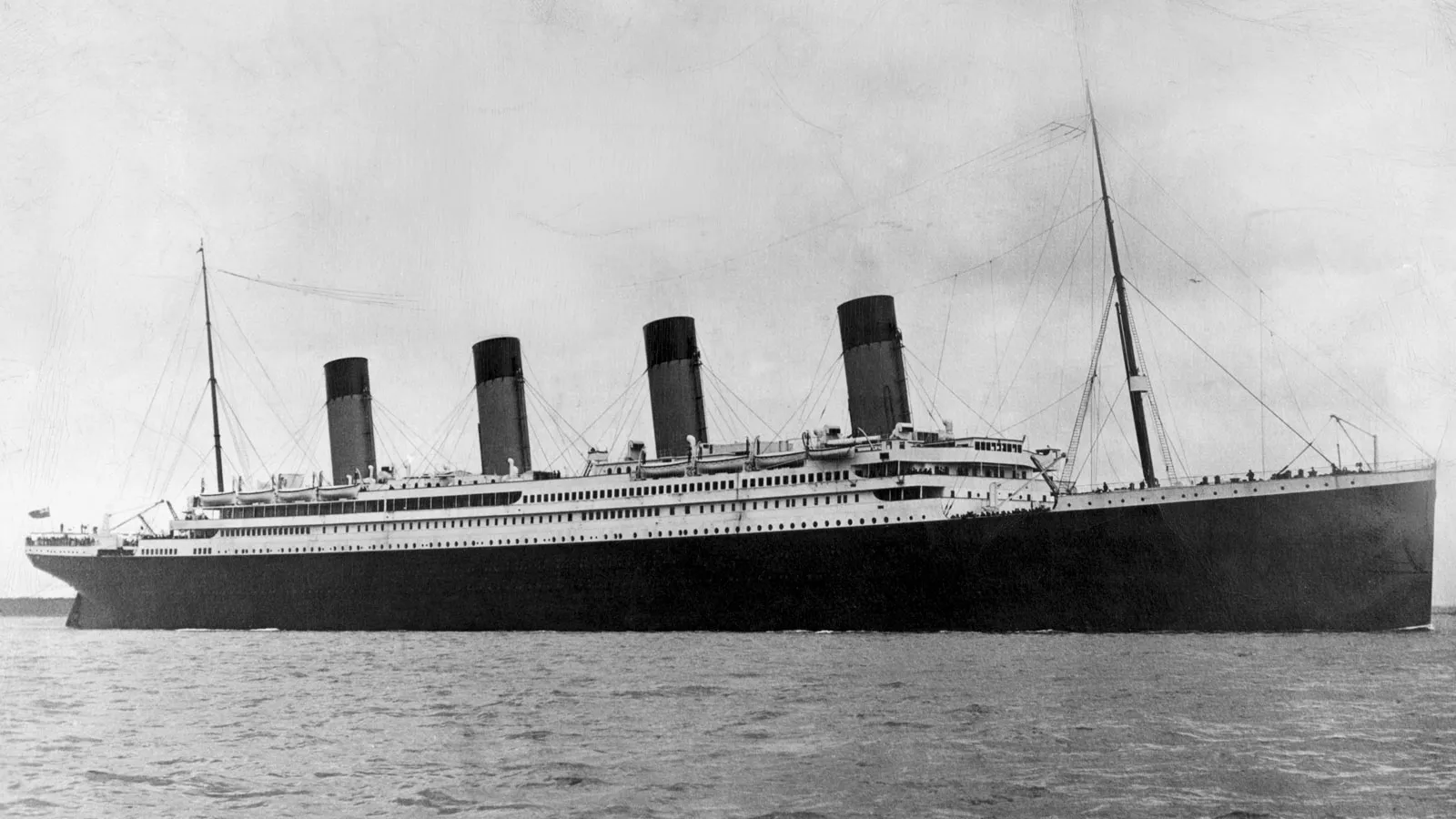
The sinking of the RMS Titanic on April 14, 1812, remains a historical event that fundamentally challenged human hubris and technological overconfidence. Proclaimed to be “unsinkable,” the flagship vessel struck an iceberg on its maiden voyage across the North Atlantic, descending to the ocean floor and claiming more than 1,500 lives. For many, the official narrative—a high-speed collision with an iceberg combined with a shortage of lifeboats—appears insufficient to fully account for the scale of the tragedy, giving rise to persistent alternative theories and claims of hidden motives.
This article examines the lesser-known hypotheses and documented technical factors surrounding the disaster, including insurance fraud claims, structural vulnerabilities, crew decision-making, and modern forensic discoveries.
Conspiracy 1: Was the Ship Swapped? The “Olympic Conspiracy” Case
Among the most enduring theories regarding the Titanic is the assertion that the vessel that sank was not the Titanic, but its sister ship, the RMS Olympic. Proponents of this claim argue that the parent company, White Star Line, orchestrated an identity swap as part of an insurance fraud scheme.
Background of the Claim: In September 1911, the RMS Olympic suffered significant structural damage following a collision with the British warship HMS Hawke. Because the White Star Line was found liable for the incident, insurance coverage was denied, leaving the company with substantial repair costs. Theorists suggest that company executives executed a covert plan: perform superficial repairs on the damaged Olympic, rebrand it as the Titanic, and deliberately sink it during a staged maritime accident to collect the insurance policy payout.
Historical Refutation: Maritime historians and forensic researchers universally reject the ship-swap theory based on several key facts:
- Financial Infeasibility: Deliberately scuttling a brand-new ocean liner for an insurance claim represents a highly illogical business decision. The repair costs for the Olympic—which was successfully restored and operated for decades—were far lower than the financial loss of scuttling a flagship vessel. White Star Line maintained strong financial backing, making such a scheme commercially irrational.
- Architectural and Design Differences: Completely swapping the identities of the two vessels was structurally impossible. The ships featured distinct design variations, interior layouts, and window configurations (port holes). Altering these features alongside underwater propulsion systems covertly would have required an unfeasible logistical effort.
- Physical Evidence: High-resolution 3D digital scans of the wreckage resting on the ocean floor confirm that the structural serial numbers stamped into the hull components and internal machinery match those of the Titanic, not the Olympic.
Conspiracy 2: The “J.P. Morgan Scheme” and the Federal Reserve Myth
Another popular theory centers on American financier J.P. Morgan, whose conglomerate, the International Mercantile Marine, owned the White Star Line. Morgan had initially booked passage on the Titanic’s maiden voyage but canceled his reservation shortly before departure.
The Theory: Proponents claim Morgan orchestrated the sinking to eliminate three prominent American millionaires onboard—Jacob Astor, Isidor Straus, and Benjamin Guggenheim. The premise suggests these individuals opposed the creation of the United States Federal Reserve central banking system, and Morgan sought their removal to advance his financial interests.
Historical Reality: Historians dismiss this assertion due to a lack of factual evidence. Historical records show that Isidor Straus actually supported the creation of a centralized banking system, while Astor and Guggenheim took no active public stance on the matter. Furthermore, Morgan possessed immense political and financial leverage, making a dangerous maritime sabotage plot entirely unnecessary to achieve his business objectives.
Documented Technical Vulnerabilities: The Coal Fire and Hull Integrity
Beyond speculative conspiracy claims, a documented operational factor contributed to the structural vulnerability of the ship: an unextinguished coal bunker fire.
Historical Context: A spontaneous combustion fire broke out in one of the Titanic’s coal bunkers ten days prior to departure and continued to burn throughout the transatlantic passage. Coal fires were relatively common on steam-powered ocean liners of that era.
Impact on Structural Integrity: Investigative journalist Senan Molony posits that the sustained heat from the bunker fire compromised the structural integrity of the steel hull. Analyzing historical photographs from 1912, Molony identified a dark mark along the starboard side of the hull near the location where the iceberg later struck. He argues that prolonged exposure to extreme heat weakened the steel plating, making the hull significantly more susceptible to breach upon impact.
Counterarguments: Marine engineering experts, including author Samuel Halpern, dispute the claim that the coal fire critically compromised the ship’s watertight bulkheads. Other analysts note that coal management efforts to isolate the fire required transferring coal to the opposite side of the ship, creating a slight port list that may have actually helped stabilize the vessel and delay capsize following the collision.
Findings from the 3D Digital Scan
Investigative research into the disaster advanced significantly with the release of the first complete 3D digital scan (“Digital Twin”) of the Titanic wreck, situated 3,800 meters below the surface of the North Atlantic. Constructed from over 700,000 high-resolution photogrammetric images, the scan provides unprecedented clarity regarding the state of the wreck.
Key findings from the digital mapping include:
- Engineering Sacrifices: Scans revealed a disengaged steam valve mechanism, providing physical evidence that the engineering crew remained at their posts deep within the ship to maintain electrical power as the vessel sank. All 35 engineers and boiler room crew sacrificed their lives to keep lights and communication systems operational, facilitating the evacuation.
- Officer Duty Confirmations: Historical accounts regarding First Officer William Murdoch were clarified; the position of the davit mechanisms (lifeboat deployment cranes) indicates that officers worked to lower lifeboats until the final moments before the deck submerged.
- Structural Breakup Dynamics: The mapping data confirmed that the vessel underwent severe structural failure as it broke apart, scattering debris across a vast field on the ocean floor rather than sinking intact.
Third-Class Passengers and Evacuation Realities
Beyond technical factors, historical analysis continues to evaluate the conditions faced by third-class (steerage) passengers during the evacuation.
Historical inquiries document that steerage passengers faced significantly higher casualty rates. Contributing factors included the complex internal layout of the lower decks, language barriers among international travelers, and limited access pathways leading up to the boat deck. While some historical accounts suggest crew members restricted access from the lower decks during the early stages of the emergency, researchers emphasize that general confusion and delayed warnings contributed heavily to the loss of life among third-class passengers.
Conclusion
The Titanic disaster remains a complex intersection of human error, technical limitations, and historical circumstance. While modern 3D scanning and forensic analysis continue to clarify the physical mechanisms of the sinking, popular interest in conspiracy claims persists.
Ultimately, the documented evidence confirms that the disaster was the result of a catastrophic collision compounded by environmental conditions and structural vulnerabilities, rather than a coordinated plot. The legacy of the Titanic continues to offer valuable lessons in maritime safety, engineering design, and emergency preparedness.