Introduction
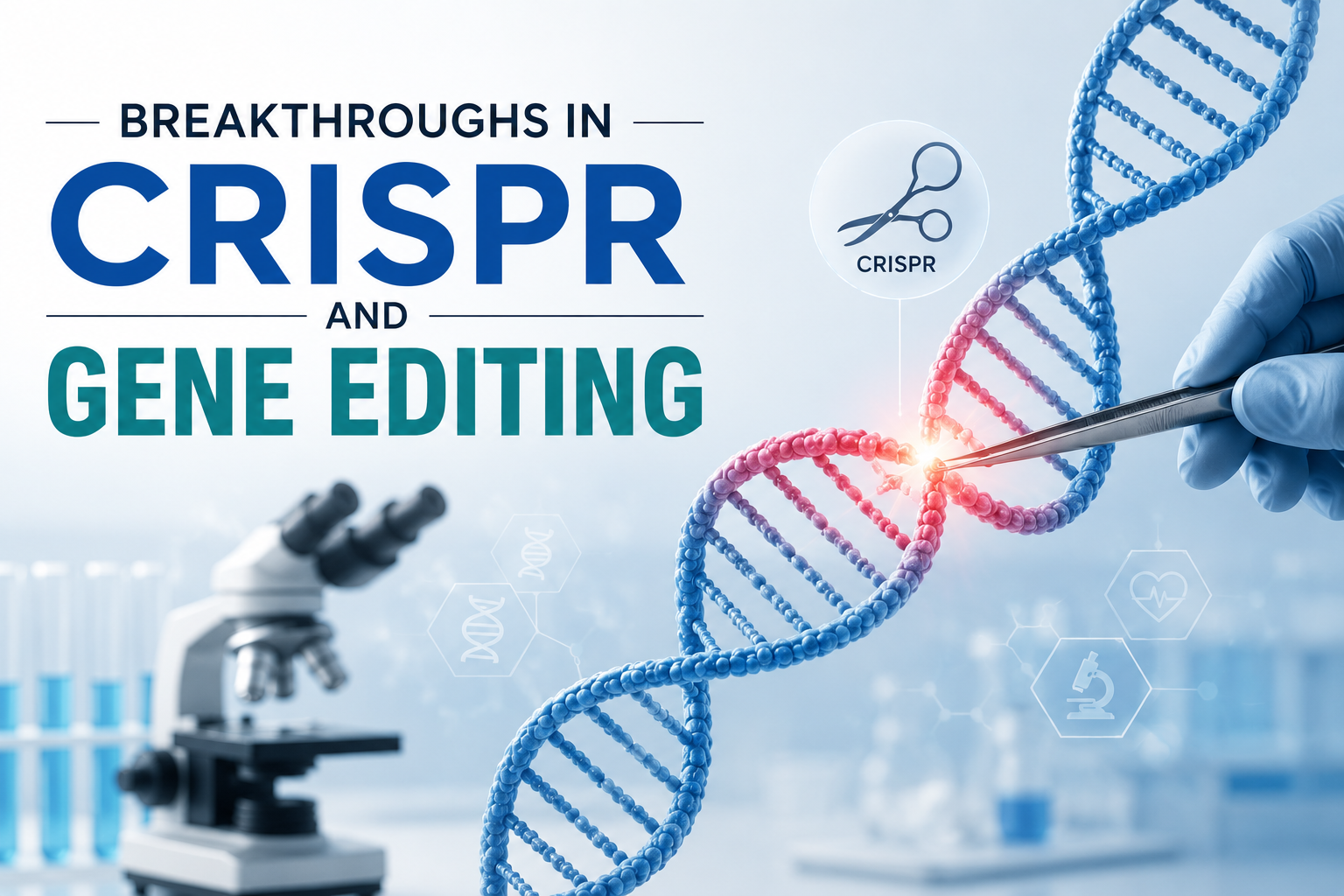
Throughout the history of science, certain breakthroughs emerge that not only transform their respective disciplines but fundamentally redefine the future trajectory of humanity. CRISPR technology stands as one such discovery. Operating as a molecular scissor within the genome, it enables precise corrections to DNA sequences, targets the root causes of genetic disorders, and offers the potential to permanently eradicate hereditary diseases.
The CRISPR-Cas9 mechanism originated as an adaptive immune defense system in bacteria that scientists repurposed for targeted genome editing. The system functions systematically: a guide RNA molecule directs the Cas9 enzyme to a specific genomic locus, where it introduces a double-strand break[cite: 1]. The cell’s endogenous repair pathways then process this break, either incorporating deliberate modifications or disabling specific genes[cite: 1]. This technology has expanded beyond research laboratories into clinical trials, agricultural applications, and global ethical discourses[cite: 1].
This overview explores recent advancements in CRISPR and gene editing, detailing efforts to enhance targeting precision, improve safety profiles, and broaden clinical applications[cite: 1].
Precision and Control: The Key to Clinical Success
A primary objective in CRISPR engineering is maximizing editing precision while minimizing off-target effects—unintended DNA cleavage occurring outside the targeted locus[cite: 1]. To address this challenge, researchers developed dual-control regulatory frameworks such as the PRINCE and Little Prince systems[cite: 1].
These systems utilize a dual-input mechanism: the nuclear localization of the Cas9 protein is controlled by a specific small molecule, while guide RNA expression is independently regulated by an inducible agent, such as doxycycline[cite: 1]. This arrangement functions as a molecular switch to modulate CRISPR activity[cite: 1]. In long-term culture experiments using human cell lines over two years, researchers at the Chinese Academy of Sciences demonstrated that 24-hour molecule induction achieved efficient target editing, whereas non-induced cells exhibited negligible background activity[cite: 1].
When evaluated in vivo using hypercholesterolemic mouse models, targeting the hepatic PCSK9 gene resulted in an approximate 50% reduction in total cholesterol and low-density lipoprotein (LDL) levels[cite: 1].
To further refine gene insertion, alternative platforms such as PASTE (Programmable Addition via Site-specific Targeting Elements) have been engineered[cite: 1]. Traditional CRISPR platforms rely on double-strand DNA breaks, which can occasionally induce genomic instability[cite: 1]. PASTE bypasses double-strand breaks to integrate large gene sequences—up to 36,000 base pairs—into specified genomic sites[cite: 1]. This capability is relevant for addressing monogenic diseases characterized by diverse mutations across large genes, such as cystic fibrosis[cite: 1].
Additionally, modifications to donor DNA chemistry have improved homology-directed repair outcomes[cite: 1]. Conjugating a Cy5 chemical moiety to the terminus of single-stranded oligodeoxynucleotide (ssODN) donor templates significantly enhances insertion efficiency while reducing cytotoxicity[cite: 1]. This approach has proven effective in sensitive primary cells, stem cells, and organoid models, successfully correcting the HBB gene associated with sickle cell anemia and operating in human cardiac organoids[cite: 1].
Cardiovascular Therapeutics: A Paradigm Shift
Cardiovascular conditions remain a leading cause of global mortality. Recent clinical trials utilizing CRISPR platforms have demonstrated notable progress in addressing key cardiovascular biomarkers[cite: 1].
One approach, CTX310, targets the ANGPTL3 gene[cite: 1]. ANGPTL3 encodes a protein that inhibits enzymes responsible for clearing triglycerides and cholesterol[cite: 1]. In a Phase 1 clinical trial evaluating a single intravenous infusion of CTX310, treated patients achieved an average 50% reduction in LDL cholesterol and a 55% reduction in fasting triglycerides within two weeks, with effects sustained over a 60-day observation window[cite: 1].
Another candidate, Nexiguran-Ziclumeran (Nex-Z), targets transthyretin amyloidosis with cardiomyopathy (ATTR-CM)—a progressive disorder where misfolded TTR protein accumulates in cardiac tissue[cite: 1]. Data from Phase 1 evaluations indicated that a single administration led to an 85% to 93% reduction in serum TTR levels sustained through 24 months, with 88% to 100% of participants demonstrating disease stabilization or clinical improvement[cite: 1].
Pediatric Advances: Sickle Cell Disease and Beta-Thalassemia
Clinical applications of CRISPR in pediatric hematology have yielded therapeutic outcomes for sickle cell disease (SCD) and transfusion-dependent beta-thalassemia (TDT)[cite: 1]. Casgevy (exagamglogene autotemcel), the first regulatory-approved CRISPR-based gene editing therapy, is authorized across multiple global jurisdictions for patients aged 12 and older[cite: 1]. Subsequent clinical trials evaluating younger pediatric cohorts (ages 5 to 11) have yielded promising metrics[cite: 1].
In pediatric SCD trials, all 11 evaluated pediatric patients who reached a one-year post-treatment follow-up remained free of severe vaso-occlusive crises (VOCs)[cite: 1]. Similarly, in pediatric TDT cohorts, all 6 evaluated patients achieving one-year follow-up maintained complete independence from red blood cell transfusions[cite: 1]. Principal investigators highlighted the rarity of achieving a 100% response rate across trial cohorts[cite: 1].
The therapeutic procedure currently requires myeloablative busulfan conditioning to clear existing bone marrow before infusing edited autologous hematopoietic stem cells[cite: 1]. While myeloablation carries inherent clinical risks, regulatory submissions to extend Casgevy approvals to broader pediatric age groups (ages 5–11) are progressing toward completion[cite: 1].
Targeted Delivery of Large DNA Payloads
Standard CRISPR-Cas9 configurations excel at small-scale genomic modifications, such as single-nucleotide substitutions or micro-indels[cite: 1]. However, conditions caused by large gene deletions or complex structural variants require the insertion of full-length functional genes[cite: 1].
Systems like PASTE combine programmable CRISPR nickases with site-specific integrases derived from bacteriophages[cite: 1]. The CRISPR component introduces a precise 46-base-pair integration site into the target genome, after which the integrase enzyme catalyzes the insertion of large DNA sequences up to 50,000 base pairs without generating double-strand breaks[cite: 1].
While still undergoing preclinical development, this platform offers a viable strategy for restoring full-length genes, such as encoding functional cystic fibrosis transmembrane conductance regulator (CFTR) constructs or insulin-producing pathways[cite: 1].
Ethical, Legal, and Societal Considerations
The rapid evolution of gene editing technologies presents complex bioethical considerations[cite: 1]. The 2018 announcement regarding the birth of germline-edited twins highlighted risks associated with unapproved heritable edits, drawing unanimous condemnation from the global scientific community and underscoring the necessity of strict regulatory oversight[cite: 1].
This event intensified global debates regarding the distinction between somatic gene editing (non-inheritable changes in target tissue) and germline gene editing (heritable modifications passed to future generations)[cite: 1]. International summits convened by major scientific academies continue to maintain that clinical germline editing remains premature due to unresolved safety and ethical concerns[cite: 1].
Furthermore, disability rights advocates emphasize that genetic therapies must distinguish between treating life-threatening medical pathologies and pathologizing human genetic variation[cite: 1]. Ethical frameworks stress that research agendas should involve affected patient communities to prioritize therapies that alleviate debilitating symptoms rather than enforcing arbitrary definitions of genetic normalcy[cite: 1].
Conclusion: A New Horizon in Genetic Medicine
Advancements in CRISPR and precision genome editing mark a significant transition in biomedical science[cite: 1]. From single-dose clinical interventions for cardiovascular conditions to curative outcomes in hereditary blood disorders, programmable gene editing is proving its clinical utility[cite: 1].
Realizing the full potential of these technologies relies on maintaining rigorous safety standards, developing non-toxic delivery mechanisms, and ensuring equitable global access[cite: 1]. Balancing scientific innovation with thoughtful ethical governance will determine how effectively genome editing addresses human disease in the coming decades[cite: 1].