Voyage of the Mary Celeste: Unsolved Secrets

Introduction: A Ship, Ten Lives, and an Unsolved Enigma

On December 4, 1872, an eerie sight unfolded in the Atlantic Ocean. The crew of the British brigantine Dei Gratia spotted another vessel drifting aimlessly. Upon boarding to inspect, they encountered a situation that birthed maritime history’s greatest enduring mystery: the Mary Celeste was completely deserted—devoid of crew, passengers, or any living soul.

All ten individuals aboard—Captain Benjamin Briggs, his wife Sarah, their two-year-old daughter Sophia, and seven crew members—had vanished without a trace. The vessel was in seaworthy condition, the cargo remained intact, ample provisions were stocked, and personal belongings were left behind—with the sole exception of a single missing lifeboat.

Over 150 years later, the mystery remains unresolved. Hundreds of hypotheses have been proposed—ranging from sea monsters and extraterrestrial abductions to alcohol vapor explosions and insurance fraud. This article examines the final voyage of the Mary Celeste, its discovery, and the primary theories formulated to explain its abandonment.


The Final Voyage of the Mary Celeste

The Mary Celeste was an American merchant brigantine that departed New York for Genoa, Italy, on November 7, 1872. The cargo consisted of approximately 1,700 barrels of industrial alcohol (ethanol).

Captain Benjamin Briggs was an experienced and respected mariner known for his capable leadership. Accompanying him on the voyage were his wife and daughter. The crew comprised seven experienced sailors, including First Mate Albert Richardson, a longtime friend of Briggs.

The vessel encountered rough weather during the transatlantic passage. The final entry in the ship’s log slate was recorded on the morning of November 25, near the Azores. Ten days passed with no further communication until the crew of the Dei Gratia sighted the vessel drifting on December 4.


The Scene of Discovery: What Was Found Onboard?

When Oliver Deveau, First Mate of the Dei Gratia, boarded the Mary Celeste alongside seaman John Wright, they documented a puzzling scene:

Condition of the Vessel:

  • One of the ship’s pumps was partially disassembled, with a sounding rod (used to measure bilge water levels) left nearby on the deck.
  • The forward and main cargo hatches were open, with their covers lying unfastened on the deck.
  • Approximately 3.5 feet of water had accumulated in the hold—a manageable amount for a vessel of its size, not indicating critical flooding.
  • The sails were partially set, with some rigging showing minor damage from weather exposure.

Evidence of the Crew and Passengers:

  • All personal belongings and foul-weather gear remained in the crew quarters.
  • Six months’ worth of fresh food and water provisions remained onboard.
  • Galley equipment and cooking utensils were organized in place.
  • The ship’s single lifeboat was missing.
  • The ship’s papers and the captain’s primary navigational instruments were absent.
  • An ornamental sword was found in the captain’s cabin, showing no traces of blood or violence.
  • The log slate remained in the cabin, containing the final entry dated November 25.

The physical evidence indicated an orderly evacuation—the crew had voluntarily departed the vessel without signs of struggle or piracy. However, key questions remained: why was the ship abandoned, and what became of the crew after boarding the lifeboat?


Hypotheses and Explanations

Over the past century and a half, numerous theories have been advanced to explain the abandonment of the Mary Celeste. These range from plausible scientific models to unfounded speculations.

Alcohol Vapor Pressure and Explosion: The Leading Theory

The most widely accepted scientific explanation centers on an alcohol vapor explosion or pressure release. The vessel was carrying 1,700 barrels of concentrated industrial alcohol. Subsequent inspections in Gibraltar revealed that nine barrels were empty, accounting for a leakage of roughly 300 gallons of ethanol.

Mechanism of the Event:

  • As the vessel transitioned from cold weather in New York to warmer Atlantic temperatures, thermal expansion caused ethanol leakage and vapor buildup within the sealed hold.
  • Friction or a small spark could have ignited the concentrated vapors trapped inside the hold.
  • A sudden pressure blowback or flash explosion blew off the main hatch covers without causing structural fire damage to the timber hull.

Experimental Validations:

In 2006, Dr. Andrea Sella of University College London conducted combustion experiments simulating the conditions in the Mary Celeste’s hold using butane gas. The simulation demonstrated that a gas explosion can produce a sudden pressure wave and flash flame capable of blowing open hatch covers without leaving charred scorch marks on wooden structures.

In 2026, researchers at the University of Manchester re-evaluated this dynamic using a 1:18 scale model of the hold. By simulating temperature variations between New York and the Azores, they confirmed that heated ethanol vapors could generate a pressure wave sufficient to blow the hatches open with a blue flash flame while leaving no residual fire damage.

Reconstructed Scenario:

Fearing an imminent catastrophic explosion or fire, Captain Briggs ordered an immediate temporary evacuation. The crew deployed the lifeboat, tethering it to the main vessel via a towline while monitoring the hold. Subsequently, either the towline parted during a sudden weather change or the tether slipped, leaving the small lifeboat stranded in open waters while the unmanned brigantine drifted away.

Alternative Hypotheses

Salvage Fraud and Conspiracy:
During the Admiralty court proceedings in Gibraltar, Attorney General Frederick Solly-Flood initially suspected foul play, proposing that the crew of the Dei Gratia staged the abandonment to claim salvage rewards. However, extensive investigations yielded no evidence of foul play, and the court awarded salvage rights in February 1873.

Mutiny:
Solly-Flood also investigated the possibility of a crew mutiny. However, the physical evidence showed no signs of violence onboard, and Captain Briggs maintained an excellent reputation among mariners and crew members.

Sea Monsters or Paranormal Events:
Sensationalized accounts in nineteenth-century media suggested attacks by giant cephalopods or mysterious phenomena. These claims lack empirical backing and remain purely fictional.

Ergot Poisoning:
A niche hypothesis suggested that the crew consumed grain contaminated with ergot fungus, leading to hallucinations and panicked abandonment. However, the crew of the Dei Gratia subsequently consumed the provisions onboard without ill effect.

The Literary Influence of Arthur Conan Doyle

Public fascination with the mystery was significantly amplified by Sir Arthur Conan Doyle (creator of Sherlock Holmes). In 1884, Doyle published a fictional short story titled “J. Habakuk Jephson’s Statement,” presented as a survivor’s account. The story introduced several fictional elements—including misspelling the ship’s name as “Marie Celeste,” a misspelling that persists in popular culture today.


Later History of the Mary Celeste

Following its recovery in 1872, the Mary Celeste remained in service for over a decade, though it acquired a reputation as an unlucky vessel among mariners.

  • Released from Gibraltar in 1873, the ship completed its voyage to Genoa to deliver the remaining cargo.
  • Over the next twelve years, the vessel changed ownership multiple times, suffering operational accidents, structural fires, and financial losses.
  • In 1885, its final owner and captain, Gilman C. Parker, intentionally ran the vessel onto Rochelais Reef off the coast of Haiti in an attempted insurance fraud. The fraud was uncovered, and Parker was prosecuted.

In 2001, an expedition led by author and marine explorer Clive Cussler located the submerged wreckage of the Mary Celeste off the coast of Haiti beneath layers of coral growth.


Conclusion: An Enduring Maritime Legend

The abandonment of the Mary Celeste remains one of maritime history’s most studied mysteries. While the alcohol vapor explosion hypothesis provides a scientifically plausible explanation, unanswered questions remain regarding the precise sequence of events that led the crew to leave the vessel.

The story of the Mary Celeste continues to serve as an enduring symbol of maritime mystery, capturing public imagination for over a century and a half.

As maritime historians often note, the name Mary Celeste has become synonymous with unexplained abandonments, remaining a prominent chapter in naval history.

Cloud vs Edge Computing: Key Differences

Introduction

Comparing cloud computing and edge computing is not merely an evaluation of two distinct technologies; it represents a convergence of two fundamental operational paradigms: centralization versus distribution, throughput versus latency, and infinite scale versus local proximity. These twin paradigms constitute core architectural pillars underpinning the modern digital economy, each fulfilling distinct technical roles across the enterprise computing landscape.

Cloud computing provides centralized, hyper-scalable infrastructure that forms the foundational backbone of global digital services. By democratizing access to enterprise-grade data storage, computational capacity, and application deployment, cloud platforms enable organizations of all sizes to access resilient global infrastructure without capital hardware expenditure. This model delivers dynamic elasticity, operational flexibility, and seamless integration with emerging software tools.

Conversely, edge computing executes data processing within physical proximity to data generation sources—such as industrial IoT sensors, traffic management systems, or mobile endpoints. By processing workloads locally, edge architectures minimize network latency, reduce backhaul bandwidth requirements, and support real-time data analysis. This localized processing capability is essential for mission-critical applications where sub-millisecond response times are paramount, including autonomous vehicle navigation, industrial automation, and remote surgical telemetry.


Cloud Computing: Scalability, Infrastructure, and Centralization

Cloud computing delivers compute resources—including virtual servers, storage, databases, networking components, and software applications—on-demand over network connections. A defining characteristic of cloud architecture is its elasticity: it allows early-stage environments and global enterprises alike to dynamically provision resources based on real-time demand under a pay-as-you-go operational expenditure model.

The centralized architecture of cloud computing delivers distinct operational advantages:

  • Elastic Scalability: Dynamic provisioning and scaling of computational resources without physical hardware constraints.
  • Cost Efficiency: Transition from heavy capital expenditure (CapEx) to predictable operational expenditure (OpEx).
  • Global Reach: Low-latency global distribution of services via interconnected data center regions.
  • Advanced Tooling Access: On-demand access to specialized frameworks for Artificial Intelligence, Machine Learning, and Big Data analytics.

Global expenditure on cloud infrastructure services reached $270 billion in 2024, representing a 30% year-over-year growth rate. These metrics underscore the essential role cloud platforms play in sustaining modern enterprise operations.

However, centralized cloud architectures introduce structural network constraints regarding latency. When data must transit across public networks to remote data center regions for execution, round-trip network delays occur. While tolerable for standard enterprise applications, this latency introduces performance bottlenecks for time-sensitive, real-time workloads.


Edge Computing: Low Latency, Localized Processing, and Distribution

Edge computing directly addresses network latency by decentralizing computation and processing data near its ingestion point rather than routing traffic to distant centralized servers. The “edge” encompasses the boundary where physical data originates—including industrial machinery sensors, smart municipal infrastructure, cellular devices, and autonomous platforms.

Edge computing represents an architectural framework composed of localized compute nodes operating in tandem to execute low-latency workloads. Primary architectural benefits include:

  • Ultra-Low Latency: Deterministic response times yielding sub-millisecond execution capabilities.
  • Bandwidth Optimization: Reduction in outbound data transmission costs by filtering and processing raw data locally.
  • Enhanced Privacy and Compliance: Localized data execution that reduces data transit across external networks.
  • Offline Resilience: Continuous operational capability during intermittent or complete network disconnections.

The primary constraint of edge computing revolves around hardware resource limits—edge nodes lack the massive compute density, memory capacity, and storage scale of centralized cloud data centers. Furthermore, managing, updating, and securing highly distributed edge node deployments introduces operational management complexity.


Comparative Analysis: Key Technical Differences

Dimension Cloud Computing Edge Computing
Location Centralized Hyperscale Data Centers (Remote) Local Ingestion Sources / Edge Nodes (Distributed)
Latency Standard (50–200 ms average) Ultra-Low (< 1–10 ms deterministic)
Processing Power Hyper-scalable / High-density compute clusters Constrained / Dedicated localized hardware
Storage Capacity Near-infinite distributed storage layers Bounded localized storage capacity
Bandwidth Usage High backhaul bandwidth dependency Minimized network backhaul transmission
Data Security Centralized governance; network transit risks Localized containment; minimized data in-transit
Scalability Automated, highly flexible elastic scaling Hardware-dependent deployment scaling
Cost Structure Pay-per-use operational models Upfront edge hardware capital investment
Primary Use Cases Big Data Analytics, AI Training, Enterprise SaaS IoT Telemetry, Autonomous Vehicles, Smart Grids

Application Scenarios and Workload Alignment

Optimal Cloud Workloads

  • Big Data Processing and Analytics: High-throughput batch processing of vast, structured and unstructured datasets requiring centralized storage pools and distributed compute clusters.
  • AI Model Training: Heavy deep-learning neural network training pipelines requiring dedicated, multi-GPU orchestration clusters available in centralized hyperscale environments.
  • Web and SaaS Platforms: Enterprise resource planning (ERP), customer relationship management (CRM), and global consumer web applications where centralized state management is required.

Optimal Edge Workloads

  • Autonomous Systems: Real-time decision systems within self-driving vehicles requiring immediate obstacle avoidance and sensory processing within deterministic millisecond timeframes.
  • Industrial Internet of Things (IIoT): Manufacturing telemetry filtration where localized processing units evaluate high-frequency sensor feeds to prevent machinery failures without saturating WAN connections.
  • Healthcare Telemetry: Patient monitoring systems and medical devices requiring uninterrupted localized monitoring and immediate event alerting.
  • Smart Infrastructure: Municipal traffic management and utility telemetry requiring real-time localized response to environmental data inputs.

Architectural Integration: The Cloud-Edge Continuum

Cloud and edge computing are complementary architectures within modern enterprise infrastructure. Advanced deployment frameworks integrate both models into a unified “Cloud-Edge Continuum.”

In this hybrid model, edge nodes handle real-time inference and localized event processing, while centralized cloud infrastructure handles long-term telemetry storage, global analytics, continuous AI model retraining, and centralized policy governance.

Consider a smart manufacturing environment:

  • Edge Layer: Localized edge gateways monitor machinery vibration and temperature telemetry in real time, triggering immediate automatic shutdowns upon detecting operational anomalies.
  • Cloud Layer: Anonymized telemetry from multiple manufacturing facilities aggregates in the cloud to train predictive maintenance ML models, which are then redeployed back to edge devices for execution.

Evolving Industry Trends

Edge AI and Inference Deployment

A key trend in 2026 is the expansion of Edge AI. Localized hardware now features specialized silicon (such as micro-NPUs) capable of running AI model inference directly on the device. This capability enables real-time AI decision-making without requiring outbound API calls to remote cloud-hosted models, improving execution speed while keeping sensitive data contained within the local network perimeter.

5G and Connectivity Integration

The maturation of 5G infrastructure provides ultra-reliable low-latency communication (URLLC) channels, enabling seamless data exchange between edge nodes and hybrid cloud environments.

User Experience Expectations

Modern applications demand responsive user interfaces. Edge nodes process latency-sensitive interactions locally, while centralized cloud infrastructure manages background synchronization, user authentication, and data persistency.


Conclusion

The distinction between cloud computing and edge computing is fundamentally defined by architectural placement—cloud provides centralized computational capacity, while edge delivers localized processing proximity. Neither paradigm replaces the other; rather, they form an integrated compute ecosystem required by modern digital applications.

Enterprise infrastructure strategies increasingly rely on a hybrid deployment architecture: edge nodes execute real-time, deterministic operations, while cloud platforms manage long-term data persistence, heavy computation, and global analytics.

An IBM Institute for Business Value analysis highlights edge computing as a transformative infrastructure capability, noting that organizations aligning their operational architectures with hybrid cloud-edge strategies build significant long-term technical advantages.

Success in modern enterprise IT requires a cohesive strategy integrating both centralized cloud elasticity and localized edge capabilities into a resilient digital architecture.

Top Cloud Computing Trends to Watch

Introduction

Just two decades ago, Amazon introduced the first major public cloud service—establishing the paradigm that organizations could access digital infrastructure dynamically without directly procuring physical hardware and data center assets. Today, cloud computing serves as the foundational utility underpinning the modern digital economy.

However, as cloud computing reaches enterprise maturity, the focus of innovation has transitioned from raw infrastructure provisioning toward intelligence, automation, and strategic value delivery. The year 2026 represents a pivotal inflection point: the era of viewing the cloud merely as a remote hosting destination is giving way to an ecosystem characterized by self-orchestration, deep artificial intelligence integration, and direct business value creation.

This article provides a comprehensive evaluation of key cloud computing trends in 2026, examining AI-driven architectural shifts, cloud financial dynamics, evolving regulatory mandates, and emerging deployment models.


A New Dimension for AI: Cloud as an Intelligent Core

Optimization of AI Infrastructure

Over recent years, enterprise investments focused heavily on establishing baseline cloud infrastructure for artificial intelligence. In 2026, these initiatives have transitioned from experimental pilots into production-grade deployments, shifting primary operational focus toward infrastructure optimization.

Organizations are actively maximizing GPU and specialized hardware utilization rates to improve return on investment (ROI). Optimization efforts include refining model efficiency to reduce compute overhead and shifting AI inference tasks to the network edge to minimize latency and improve overall operational performance.

AI as a Service (AIaaS)

Maintaining full, bespoke cloud environments for proprietary AI stack operations is not always optimal for every enterprise scenario. AI as a Service (AIaaS) has emerged as an efficient alternative, enabling businesses to integrate pre-trained AI models and managed AI capabilities provided by specialized vendors.

This model allows organizations to delegate the operational complexity of designing, deploying, and maintaining specialized AI infrastructure to third-party providers. Except for entities requiring highly custom model architectures, AIaaS delivers a streamlined, cost-effective deployment path.

Agentic AI and Agent Meshes

A defining trend in 2026 is the rapid adoption of Agentic AI—systems capable of autonomous decision-making, task execution, and multi-agent collaboration. This paradigm introduces a new architectural component within cloud environments: the AI Agent Mesh.

The agent mesh serves as an infrastructure coordination layer connecting AI agents and foundational models, providing critical operational capabilities:

  • Tracking agent status and execution states across enterprise environments.
  • Enforcing governance rules, such as restricting unauthorized data sharing between independent agents.
  • Mitigating cybersecurity risks by preventing unauthorized access to sensitive data stores.
  • Optimizing operational costs by routing requests to resource-efficient models where appropriate.

The Evolution of Post-Web Architectures

Traditional vertical layers within the cloud software stack are undergoing structural consolidation. Large Language Models (LLMs) accelerate this process, as single API calls can consolidate capabilities previously distributed across four or five distinct cloud-native architectural layers.

Consequently, procurement paradigms are evolving from traditional resource-based pricing toward token-based utilization models. Cloud providers now differentiate their offerings across three primary layers:

  • AI Cloud Infrastructure: Multi-tenant AI Infrastructure as a Service (IaaS) alongside dedicated physical compute resources.
  • Model as a Service (MaaS): Managed model production, fine-tuning, and inference hosting services.
  • Agent as a Service (AaaS): Managed platforms supporting autonomous agent deployment and workflow execution.

Emerging Cloud Models: Neoclouds, Private Environments, and Micro Edges

Neoclouds: Specialized GPU Infrastructure Providers

Alongside traditional hyperscalers (AWS, Azure, GCP), a specialized category of providers—termed “Neoclouds”—has established a strong market presence. GPU-first providers such as CoreWeave, Lambda, and Nebius offer infrastructure engineered specifically for high-density AI and machine learning workloads.

Forrester projects that neoclouds will generate $20 billion in revenue in 2026, capturing market share in specialized generative AI compute. Backed by venture capital and hardware partnerships, these providers continue to expand globally while integrating open-source AI frameworks and specialized infrastructure capabilities.

Private and Sovereign Cloud Environments

In response to public cloud security requirements, cost predictability, and data lock-in considerations, organizations are placing renewed emphasis on controlled cloud architectures.

Adoption of private cloud environments continues to grow—a Broadcom survey indicates that 53% of senior IT decision-makers prioritize building new workloads within private cloud architectures. Simultaneously, sovereign clouds are seeing increased deployment to satisfy strict regulatory, data privacy, and jurisdictional mandates—particularly within finance, education, healthcare, and pharmaceutical sectors.

Forrester estimates that at least 15% of enterprises in 2026 will leverage private AI deployments hosted on private cloud infrastructure to maintain strict control over proprietary corporate data.

Micro Cloud Edge Deployments

The micro cloud edge model combines localized edge deployments with centralized cloud management. Edge locations utilize compact, pre-configured hardware running containerized software stacks ready for rapid deployment. By processing data locally and cost-effectively at the edge, this architecture provides organizations with effective options for optimizing bandwidth and transit costs.

Hybrid and Multi-Cloud Ecosystems

Hybrid cloud configurations represent the primary deployment model for 73% of organizations. In parallel, multi-cloud strategies remain widely adopted to reduce vendor lock-in, improve operational redundancy, and optimize workload placement across providers.


Cost Economics and FinOps Management

Cloud Expenditure and Waste Mitigation

Global expenditure on cloud infrastructure continues to reach record levels in 2026. Gartner reports that Australian organizations alone are projected to spend A$33.6 billion on public cloud services in 2026, representing a 17.9% year-over-year increase. Globally, cloud infrastructure expenditure reached $128.6 billion in Q1 2026, up 35% compared to the prior year period.

However, operational data highlights an ongoing challenge: unoptimized or wasted cloud expenditure reached 29% in 2026, reversing a five-year downward trend. This indicates that nearly one-third of overall cloud expenditure remains inefficiently allocated.

Primary Drivers of Increasing Cloud Costs

Several macro factors contribute to rising cloud expenditure:

  • Increased energy and power consumption costs associated with high-density AI data centers.
  • Escalating capital costs for specialized hardware infrastructure.
  • Expanding feature sets and service integration demands from enterprise consumers.

Institutionalization of FinOps and Cloud Centers of Excellence (CCOE)

To address expenditure management, organizations are institutionalizing governance frameworks. Dedicated FinOps teams are now deployed across 63% of enterprises. Similarly, 71% of organizations have established a Cloud Center of Excellence (CCOE) to align technical cloud operations with broader financial and strategic goals.


Regulatory Mandates and Security Governance

Evolving Compliance Frameworks

Regulatory compliance for cloud operations has become increasingly complex in 2026. The European Union’s AI Act reached full enforcement in August, establishing strict compliance standards governing data pipelines powering AI applications. Additionally, state-level AI regulations in the U.S. (including frameworks in Colorado and Indiana) alongside the enforcement of the EU Product Liability Directive in late 2026 require comprehensive compliance monitoring.

Data localization laws continue to impact global cloud footprints. Jurisdiction-specific residency mandates require providers to deploy redundant infrastructure and isolated logical environments, adding operational complexity and overhead.

Security Monitoring and Observability

Maintaining uniform security policies across multi-cloud and on-premises environments remains a key operational priority. Enterprise IT departments are focusing on updating security policies and deploying cloud-native security controls.

Advanced observability tools have become essential components of modern cloud operations. Unlike traditional network monitoring utilities, comprehensive observability platforms provide deep visibility across multi-cloud transaction workflows, system logs, containerized microservices, and potential security anomalies.


Market Landscape and Provider Positions

Hyperscaler Capital Expenditure

Major hyperscalers continue to allocate significant capital expenditure toward infrastructure expansion in 2026:

  • AWS projects capital investments reaching $200 billion through 2026.
  • Microsoft Azure reported quarterly capital expenditure reaching $37.5 billion.
  • Google Cloud adjusted its 2026 capital expenditure guidance to $175–185 billion.

In Q4 2025, worldwide cloud infrastructure service spending reached $110.9 billion, representing a 29% year-over-year increase.

Provider Market Share Distribution

According to 2026 CIO survey data, Microsoft Azure maintains strong preference metrics among enterprise technology leaders, with 55% listing Azure as their primary cloud provider. However, AWS retains overall market leadership with a 32% market share as of Q4 2025, followed by Azure at 22%.

Regional Growth Trajectories

North America accounted for 24.18% of the global cloud market share. The Asia-Pacific region continues to lead growth metrics with a projected CAGR of 21.65%. Local providers such as Alibaba Cloud and Tencent Cloud maintain strong positions in China, while global providers expand infrastructure across Japan, South Korea, India, and ASEAN markets.


Strategic Outlook: The Next Phase of Cloud Evolution

Cloud computing in 2026 has entered what industry analysts term the “Value Era”—a phase where organizational success depends on aligning technological capabilities with clear business outcomes.

Gartner notes that rapid capital allocation toward data center systems and IaaS AI infrastructure reflects one of the largest sustained infrastructure buildouts in modern technical history.

Core Strategic Imperatives:

  • AI Integration as Core Infrastructure: Agentic AI, AIaaS, and AI-native architectures represent baseline technical standards.
  • Governance and Cost Control: Formalized FinOps and CCOE frameworks are essential operational requirements.
  • Diversified Deployment Models: Neoclouds and sovereign private clouds offer viable alternatives to traditional public cloud paradigms.
  • Regulatory Alignment: Regional compliance and data sovereignty mandates dictate global cloud architecture designs.

Conclusion

The future of cloud computing is characterized by intelligent, autonomous systems focused on business value creation. Beyond serving as raw infrastructure, the cloud functions as an overarching operating environment driving modern enterprise workflows.

As Gartner analysts highlight, market expansion is accompanied by tight IT budgets, hardware supply constraints, evolving memory costs, and shifting AI investment priorities.

Navigating this evolving landscape requires organizations to continuously align technical architectures with changing economic and regulatory realities. Entities that successfully integrate these cloud trends will build resilient, adaptable digital infrastructure for the future.

Web3 Explained: The Future of the Internet

Introduction: The Third Wave of the Internet

The history of the internet can be divided into three distinct chapters. The first chapter, Web 1.0, defined the 1990s and early 2000s—a “read-only” web characterized by static pages with no mechanisms for user interaction or content contribution. The second chapter, Web 2.0, ushered in the modern paradigm: social media platforms, user-generated content, cloud architecture, and the platform economy. Entities such as Google, Meta, Amazon, and Apple emerged as dominant intermediaries, consolidating user data and monetizing digital interactions at scale.

Web3 emerged as a direct response to this centralization. Coined in 2014 by Ethereum co-founder and Polkadot founder Gavin Wood, Web3 represents a “blockchain-based decentralized online ecosystem.” Its foundational goal is to shift data ownership, digital identity, and asset management away from centralized technology conglomerates back to individual users.


The Core Pillars of Web3

Web3 is not a single technology, but rather a collection of protocols, architectures, and principles that collectively establish a new web model. Its primary components include:

Blockchain: The Decentralized Infrastructure

The technical foundation of Web3 relies on distributed ledger technology—storing data across a network of independent nodes rather than centralized servers. Because no single entity maintains complete administrative control, data recorded on a blockchain remains resilient against unauthorized manipulation, censorship, and single-point-of-failure risks.

Blockchain protocols provide a verifiable mechanism for establishing digital ownership without relying on a central authority. Assets held on a blockchain carry cryptographically provable ownership records that cannot be unilaterally revoked by centralized institutions.

Smart Contracts: Trustless Automation

Smart contracts are self-executing programs deployed on blockchain networks that automatically enforce contractual conditions once predefined criteria are met. This mechanism eliminates the need for traditional intermediaries, such as legal brokers or escrow providers, across various digital transactions.

Smart contracts serve as essential building blocks within the Web3 ecosystem. They power decentralized applications (dApps) that operate across blockchain networks rather than private servers. Unlike conventional applications, dApps are typically open-source and governed by immutable protocol rules that cannot be unilaterally altered by single entities.

Decentralized Identity and Asset Ownership

In Web2 environments, platforms maintain complete ownership of user identities and data. Account suspensions can result in the loss of audiences, content, and revenue streams. Web3 shifts this power dynamic.

In a Web3 framework, users control their identities and digital assets using non-custodial wallets. Because identity records and assets reside directly on the blockchain, users can switch between different application interfaces while retaining full access to their data, as no individual platform owns the underlying ledger. Platforms must therefore compete to serve users rather than lock them in.


Real-World Applications: Active Web3 Deployments

Web3 has moved beyond theoretical frameworks into active daily use by millions of users worldwide.

Decentralized Finance (DeFi)

DeFi represents one of the most mature implementations within the Web3 space. DeFi platforms utilize smart contracts to replicate traditional financial services—including lending, borrowing, trading, and yield generation—without relying on traditional banking intermediaries. Users interact directly with protocols via blockchain wallets, with transactions settling transparently on-chain.

Stablecoins and DeFi protocols currently process substantial transaction volumes globally on an annual basis.

NFTs and Digital Ownership

Non-Fungible Tokens (NFTs) function as verifiable certificates of digital authenticity. Artists and creators can monetize work directly through provable on-chain ownership records, allowing them to capture value while bypassing traditional distribution intermediaries.

Decentralized Autonomous Organizations (DAOs)

DAOs represent a governance structure where organizations are managed through smart contracts rather than executive boards. Participants hold governance tokens that grant voting rights on organizational proposals, with approved actions executing automatically on-chain. This framework enables coordinated collective decision-making while reducing centralized administrative overhead.

Decentralized Social Networks

Platforms such as Lens Protocol and Farcaster offer alternatives to centralized social networks. On these decentralized protocols, users retain ownership of their social graphs and published content regardless of the specific client interface used to access the network.


Geographic Adoption: Practical Utility in Latin America

While some regions approach Web3 primarily from a theoretical standpoint, Latin America demonstrates significant practical adoption driven by economic necessity. Freelancers utilize stablecoins for cross-border client settlements without reliance on traditional banking fees, families leverage blockchain rails for lower-cost remittance transfers, and individuals utilize digital assets as a hedge in markets with restricted access to foreign currency reserves.

The region consistently ranks high in global crypto adoption metrics—not due to speculative trends, but because direct digital asset ownership provides functional utility where traditional financial infrastructure presents high friction or barriers to access.


Current Operational Challenges

Despite its potential, Web3 faces several technical and structural hurdles:

User Experience and Technical Complexity

Early blockchain applications required significant technical expertise, including private key management, gas fee navigation, and complex smart contract interactions. Although user interfaces and dApps continue to become more intuitive, managing seed phrases and transaction fees still presents onboarding friction for non-technical users.

Scalability and Infrastructure Throughput

Many baseline blockchain networks continue to address throughput limitations necessary for global-scale transaction volumes. Achieving mass adoption requires layer-1 and layer-2 scaling solutions that match Web2 performance metrics.

Regulatory Frameworks

Global regulatory bodies continue to develop standardized classification and compliance frameworks tailored to decentralized assets and protocols.

Centralization Dependencies

The Web3 developer community actively addresses infrastructure reliance on centralized access points. While base protocols are decentralized, many user-facing applications still depend on centralized RPC nodes and hosting providers, making full end-to-end decentralization an ongoing development goal.


The Post-Web Evolution

As Web3 infrastructure matures, new paradigms are emerging around the integration of Artificial Intelligence and decentralized protocols—often referred to as the Post-Web evolution. As outlined in research such as the “Post-Web Thesis” by Outlier Ventures, AI agents are beginning to abstract underlying blockchain complexity.

Automated systems now assist with signing transactions, managing network fees, and bridging assets across chains. This shifts user interactions from manual execution to delegated intent—moving from an “attention economy” toward an “intent economy” where automated agents execute complex multi-chain operations based on user parameters.


Conclusion: The State of Web3

Web3 represents a fundamental evolution in web architecture. While core components are operational, the broader ecosystem continues to mature.

Operational Milestones: Stablecoin networks settle billions in daily volume, DeFi protocols manage significant capital, and decentralized naming systems and blockchain-based gaming environments operate at scale.

Ongoing Infrastructure Development: Improving non-technical user onboarding, expanding network throughput, and establishing clear regulatory standards remain active priorities across the industry.

The trajectory points toward an integrated web architecture: decentralized rails will increasingly handle functions requiring explicit ownership, verifiability, and censorship resistance (such as identity, asset management, and financial settlement), while centralized systems remain where high-convenience, low-trust processing is preferred. Web3 represents a structural shift toward verifiable digital ownership across the internet.

Impact of Generative AI on Modern Jobs

Introduction: A New Era of Work

Over the past three years, Generative AI has evolved from an experimental tool into a core business reality. The year 2026 marks the point where organizations are completely redesigning their workflows around AI rather than merely integrating it into existing operations. This shift presents a complex, dual-faceted landscape in the labor market—offering unprecedented opportunities on one hand, while introducing deep structural challenges on the other, particularly for early-career professionals.


The Macro Picture: Structural Transformation Over Mass Unemployment

Data indicates that AI has not caused widespread mass unemployment. Recent research led by economist Erik Brynjolfsson at the Stanford Digital Economy Lab—analyzing payroll data from 3.5 to 5 million U.S. workers between January 2021 and June 2026—shows that overall employment grew by 6% during the study period. Furthermore, occupations most exposed to AI also recorded a 4% increase in employment.

Organizations with high AI investment are actively expanding their workforce. A separate study examining data across 21,559 U.S. companies revealed that firms deeply adopting AI saw a 10.2% increase in total headcount over the subsequent two years, compared to minimal changes in low-adoption firms. Notably, these same high-adoption companies experienced a 12% increase in entry-level hiring, challenging the assumption that AI primarily eliminates junior roles.

According to projections by the World Economic Forum, 170 million new roles will emerge globally by 2030 alongside the displacement of 92 million jobs, resulting in a net gain of 78 million positions.


The Dark Side: Unprecedented Pressure on Early-Career Professionals

While macro metrics remain positive, a major trend in 2026 is the disproportionate impact on young workers. According to Stanford’s analysis, the employment gap for individuals aged 22 to 25 working in highly AI-exposed occupations reached 19%.

This metric indicates that the employment rate for this age group in high-exposure roles is 19% lower than their peers in less exposed roles. Between November 2022 and June 2026, employment for workers aged 22–25 in high-exposure roles declined by 11%, whereas employment for the same demographic in low-exposure roles grew by 10%.

This divergence stems primarily from a reduction in entry-level hiring velocity rather than direct layoffs of existing staff. Organizations are increasingly automating routine tasks rather than filling traditional junior headcount. This trend extends beyond North America; an analysis by the Bank of Korea revealed that out of approximately 295,000 lost youth jobs (ages 15–29), 94% were concentrated in AI-intensive sectors.


Underlying Dynamics: Automated Tasks vs. Complementary Work

This operational divide exists because AI excels at automating routine, standardized tasks—the specific responsibilities historically assigned to entry-level staff.

A key framework explaining this shift lies in the distinction between “Codified Knowledge” and “Tacit Knowledge”:

  • Codified Knowledge: Formalized, standardized, and documented information that can be taught via structured manuals or curricula. AI models replicate and execute this knowledge with high efficiency. Occupations relying heavily on codified knowledge have seen declines in junior hiring.
  • Tacit Knowledge: Experiential knowledge acquired through practice, mentorship, and situational context over time. Experienced professionals rely on tacit knowledge, which AI cannot easily replicate. Consequently, employment for senior personnel in these domains has expanded.

Experienced personnel utilize AI as a force multiplier—leveraging established domain knowledge to evaluate and refine AI outputs. Conversely, junior workers whose primary output consists of basic data preparation and initial drafting face greater task displacement.


New Roles and Essential Skills: The 2026 Standard

Generative AI is transforming existing workflows while simultaneously creating entirely new job categories that did not exist three years ago.

A global report by Randstad Digital analyzing over 35 million job postings identified the top 10 fastest-growing AI-focused roles worldwide:

Role Growth Rate
AI Trainers 281%
AI Solutions Leads 226%
Process Automation Specialists 196%
AI Analysts 180%
Prompt Engineers 174%
AI Engineers 255%
Generative AI Engineers 197%

Job postings for software developers with integrated AI skills have surged by 597% since 2021, compared to a 28% increase for traditional developer listings.

Evolving Skill Requirements

Skill requirements continue to shift rapidly in 2026. According to PwC, approximately 44% of core worker skill sets have adapted over the past 24 months. World Economic Forum research indicates that the half-life of professional skills has shortened significantly.

Core competencies in demand include:

  • Strategic Prompting and Orchestration: The ability to manage and coordinate multiple specialized AI agents simultaneously.
  • AI Governance and Bias Mitigation: Ensuring automated decision-making aligns with regulatory standards and corporate compliance.
  • Complex Emotional Intelligence: Navigating human relationships and team dynamics within increasingly automated work environments.

Basic AI literacy is no longer a differentiating factor; it has become a baseline expectation. Differentiating value lies in business integration, critical judgment, and managing complex human-machine workflows.


Global Perspective: Regional Variations

AI adoption dynamics manifest differently across key global markets:

  • United States: Represents 29% of global AI technology job listings. According to PwC, AI-exposed entry-level positions in the U.S. grew by 35%, while non-exposed entry-level roles saw a 10% decline.
  • India: Holds the second-largest share of global AI roles at 20.5%, but faces an acute talent shortage. The unfilled vacancy rate for Machine Learning Engineers in India stands at 11.2%, compared to 8.2% in the U.S.
  • Europe: In Germany, an Ifo Institute survey revealed that half of surveyed companies expect entry-level wages for non-degreed junior workers to decrease due to AI automation.
  • BRICS Economies: Nations such as Brazil (8.6%) and Argentina (7.1%) continue to expand their share of global AI-related job postings.

Policy Challenges: Adapting for the Future

These developments present complex questions for policymakers and educational institutions. A research paper from the Harvard Kennedy School outlines key scenarios, emphasizing that routine execution tasks are rapidly automating, traditional apprenticeship pathways are under pressure, and systemic skill requirements are shifting toward system architecture, AI governance, and socio-technical integration.

The OECD advocates for updated regulatory frameworks around “algorithmic management,” while governments are increasingly mandating transparency standards for AI-driven hiring and performance evaluation tools.


Conclusion: Toward a New Social Contract

The impact of Generative AI on the modern workforce represents a structural evolution. Rather than causing generalized job destruction, AI is redefining the nature of work and skill valuation.

Organizations deeply integrating AI—particularly those leveraging it as a strategic capability rather than a simple cost-cutting tool—are expanding overall headcount and creating specialized technical roles.

However, the structural pressure on early-career hiring requires deliberate policy and educational responses. As routine tasks automate, workforce entry pathways must adapt to ensure junior professionals develop both foundational domain knowledge and advanced AI orchestration skills.

As highlighted by the World Economic Forum, AI integration within global labor markets is permanent. Success lies in building responsible human-AI collaborative ecosystems, adapting educational pipelines, and aligning workforce skills with changing economic demands.

Cybersecurity Basics for Everyday Web Users

Introduction

Using the internet in today’s interconnected world has become as essential as breathing. We live, work, shop, and maintain personal connections across digital spaces. Just as we lock our doors at night, secure our vehicles, and keep our physical wallets safe, protecting our digital presence requires deliberate security habits. Cybersecurity is not exclusively the domain of technical experts; it is a fundamental responsibility for every active internet user.

In the current digital ecosystem, vast amounts of personal information—including names, residential addresses, financial accounts, medical histories, personal preferences, and biometric markers—are stored online. This data carries significant value, prompting cybercriminals to continuously refine exploitation techniques. Everyday internet users are frequently targeted because individual accounts often lack the advanced enterprise-level defenses deployed by large corporations.

This guide serves as a practical resource for individual users seeking to enhance their digital security posture. The following sections outline accessible, effective methodologies to mitigate cyber risks and safeguard your online identity.


Step 1: Strong Passwords — Your Primary Defensive Barrier

Authentication credentials serve as the primary access key to digital accounts. Weak credentials present significant security vulnerabilities that unauthorized actors can exploit. According to industry data compiled by the World Economic Forum, over 80% of global data breaches involve weak, reused, or compromised passwords.

Characteristics of a Strong Password

  • Length: Maintain a minimum length of 12 characters, with 15 or more characters strongly recommended.
  • Complexity: Incorporate a combination of uppercase letters, lowercase letters, numerical digits, and special characters (e.g., !@#$%^&*).
  • Unpredictability: Avoid dictionary words, sequential character patterns, or personal details such as names or birth dates (e.g., avoid “password123”).
  • Uniqueness: Assign a distinct credential set to every individual account without credential reuse.

Password Managers: Centralized Credential Security

Manually memorizing unique, complex credentials across dozens of accounts is impractical. Password managers address this challenge by storing encrypted credentials within a secure digital vault, requiring users to remember only a single master key. Reputable password management solutions—such as 1Password, Dashlane, and Bitwarden—safeguard stored credentials while generating cryptographically strong, unique passwords for new accounts.

Two-Factor Authentication (2FA): Secondary Verification Layer

Even if an unauthorized party obtains a password, Two-Factor Authentication (2FA) adds a critical layer of defense. 2FA requires users to present two distinct authentication factors before granting account access—typically a primary credential combined with a time-sensitive verification code.

These verification codes are delivered via SMS or generated through dedicated authenticator applications (such as Google Authenticator or Authy). Where available, software-based authenticator apps are preferred over SMS-based delivery, as SMS channels remain vulnerable to SIM-swapping attacks and interception.


Step 2: Mitigating Phishing Attacks — Recognizing Deceptive Messaging

Phishing remains one of the most common vectors for cyber attacks. Attackers craft fraudulent emails, SMS messages, or web interfaces designed to impersonate legitimate entities—such as banking institutions, technology providers, or social platforms—with the intent of harvesting account credentials, financial data, or sensitive personal information.

Key Indicators of Phishing Attempts

  • Inconsistent Sender Addresses: Fraudulent communications frequently use domain names that slightly mimic legitimate domains (e.g., support@arnazon.com instead of support@amazon.com).
  • Grammatical and Formatting Errors: Phishing lures often contain spelling mistakes, irregular syntax, or non-standard formatting.
  • Artificial Urgency: Messages frequently deploy high-pressure tactics, threatening immediate account suspension or financial penalties if action is not taken quickly.
  • Hyperlink Inspection: Hovering over embedded links before clicking reveals the actual target URL, helping identify redirected endpoints.
  • Unsolicited Communications: Exercise caution when receiving unexpected messages containing links or file attachments from unknown senders.

Response Procedures for Suspected Attacks

If an email or message appears suspicious, navigate directly to the official organization website via a browser rather than interacting with embedded links. If credentials have been entered on a suspect page, immediately update passwords for affected accounts and contact relevant financial institutions or service providers.


Step 3: Software Updates — Patching System Vulnerabilities

Operating systems, web browsers, and applications contain software vulnerabilities that malicious actors can exploit. When software vendors identify these security flaws, they issue software updates and security patches to remediate system vulnerabilities.

Maintaining current software versions across all devices—including desktop operating systems (Windows, macOS), mobile platforms (Android, iOS), browsers, and third-party software—is critical for system integrity. Delaying updates leaves known security gaps exposed to potential exploitation.

Automated Update Configuration

Enable automated update features across device operating systems and installed applications to ensure security patches are applied systematically as soon as they become available.


Step 4: Public Wi-Fi Security — Mitigating Network Interception

Unencrypted public Wi-Fi networks in hotels, cafes, and transportation hubs present significant security risks. Attackers operating on the same physical network can perform man-in-the-middle (MitM) attacks to intercept unencrypted network traffic, including credentials and financial transmissions.

Best Practices for Public Wi-Fi Usage

  • Avoid Sensitive Transactions: Refrain from accessing online banking, executing financial transactions, or entering sensitive account credentials while connected to open public networks.
  • Deploy a Virtual Private Network (VPN): A reliable VPN establishes an encrypted tunnel for network traffic, preventing local network eavesdropping.
  • Utilize Cellular Connections: When handling sensitive data, switch from public Wi-Fi to mobile cellular data, which provides greater baseline transport security.

Step 5: Data Backup Strategies — Protecting Against System Loss

Ransomware attacks involve unauthorized encryption of user files, followed by extortion demands for decryption keys. Maintaining regular, isolated data backups provides a reliable recovery mechanism without complying with ransom demands.

Implementing Effective Backups

  • Cloud Backup Solutions: Maintain secure off-site copies of critical data using encrypted cloud storage services such as Google Drive, iCloud, or OneDrive.
  • External Storage Isolation: Periodically replicate essential files to an offline external hard drive that remains disconnected from local networks when not actively backing up.
  • Automated Backup Tasks: Configure automated system backup utilities to run routine backup cycles without requiring manual intervention.

Systematic data backups transform potential ransomware incidents from catastrophic data losses into manageable operational recoveries.


Step 6: Social Media Privacy — Managing Digital Footprints

Over-sharing personal information on social media platforms provides malicious actors with intelligence that can be used for identity theft, targeted social engineering, or credential guessing. Information such as location data, employment details, family names, and birth dates adds to a user’s exposed attack surface.

Social Media Security Controls

  • Audit Privacy Settings: Restrict profile visibility settings so that published content is visible only to trusted contacts rather than the general public.
  • Limit Public Personally Identifiable Information (PII): Avoid sharing sensitive identifiers such as full physical addresses, primary phone numbers, or complete dates of birth publicly.
  • Disable Real-Time Geolocation Tagging: Refrain from publishing real-time location tags while away from home, as this alerts unauthorized actors to unoccupied residences.
  • Avoid Unverified Online Quizzes: Online questionnaires inquiring about childhood pets, maiden names, or first vehicles are frequently structured to harvest security verification answers.

Step 7: Antivirus and Firewalls — Essential Technical Controls

Antivirus and anti-malware software protect local file systems by detecting and removing malicious software threats, including viruses, spyware, and ransomware. A network firewall monitors incoming and outgoing traffic, enforcing security rules to block unauthorized connection attempts.

Implementation Measures

  • Deploy Reputable Security Software: Utilize recognized endpoint protection tools, including built-in platform defenses like Windows Defender or reputable third-party security utilities.
  • Maintain Threat Definition Databases: Ensure endpoint security software receives regular definition updates to recognize new malware signatures.
  • Enable Host-Based Firewalls: Ensure native operating system firewalls remain active to filter unauthorized network connections.

Step 8: Social Engineering — Recognizing Manipulation Tactics

Cyber threats extend beyond technical exploits. Social engineering techniques target human psychology, leveraging trust, urgency, or authority to manipulate individuals into disclosing confidential information or executing unauthorized actions.

Common Social Engineering Tactics

  • Pretexting: An attacker invents a scenario, such as impersonating bank personnel or IT support, to request verification codes or account passwords under false pretenses.
  • Baiting: Attackers leave compromised physical media, such as malware-infected USB drives, in public areas expecting targets to insert them into private systems.
  • Impersonation of Authority: Attackers claim executive or technical authority within an organization to coerce employees into bypassing standard security protocols.

Defensive Measures

  • Never Disclose Passwords: Legitimate organizations and service providers will never request personal passwords over the phone or via unverified email channels.
  • Independent Channel Verification: If a contact requests sensitive information, end the communication and initiate contact independently using verified corporate phone numbers or official support portals.
  • Maintain Security Awareness: Developing an understanding of common manipulation techniques reduces vulnerability to human-targeted exploits.

Conclusion

Maintaining effective cybersecurity posture relies on consistent personal operational security habits. Implementing strong, unique passwords, activating multi-factor authentication, identifying phishing indicators, maintaining software update cycles, securing public Wi-Fi access, backing up critical data, enforcing social media privacy controls, and recognizing social engineering tactics form a robust defense against common cyber threats.

Individual internet users are frequent targets because personal accounts often present accessible entry points. Basic security oversights—such as weak password reuse, unencrypted public Wi-Fi usage, or clicking malicious links—can compromise personal data and online identities.

Effective cybersecurity is not a static product, but an ongoing operational process defined by daily online habits. Implementing these basic defensive practices step-by-step builds a far more resilient digital future.

Top AI Trends Shaping the Future

Introduction: The Dawn of a New Era

Artificial Intelligence (AI) is no longer just a technical curiosity — it has become the foundation of the economy, society, and daily life. In 2026, we stand at a pivotal moment where AI has moved beyond conversational assistants (chatbots) to begin its journey toward becoming an autonomous, action-oriented system capable of interacting with the physical world. According to Marco Argenti, Chief Information Officer at Goldman Sachs, 2025 witnessed the most significant transformations in his 40-year career, and 2026 is poised to bring even greater changes.

This article covers the most prominent AI trends of 2026, drawing insights from the latest reports by leading research institutions — Forrester, Gartner, Google, Goldman Sachs, and others.


Unprecedented Surges in Capital Expenditure by Tech Giants

Wall Street analysts, who repeatedly underestimated AI investments, now predict that major cloud computing companies will invest over half a trillion dollars in 2026. This investment will heavily focus on AI infrastructure, data centers, and power supply networks.

Seven major tech corporations now account for more than 30% of the total S&P 500 market capitalization and nearly a quarter of its earnings. This signals that AI development is increasingly concentrated among a few giant firms, reinforcing a “winner-takes-most” dynamic.


Autonomous AI Agents: The Central Theme of 2026

The Shift from Conversation to Execution

If 2023 and 2024 were the eras of “talking” AI, 2026 is the era of “doing” AI. Autonomous AI agents (Agentic AI) are systems capable of executing complex, multi-step workflows without human intervention. Upon receiving a single goal from a user, they break it down into actionable steps, interact with various applications, and deliver finalized outputs.

OpenAI’s ChatGPT Work

In July 2026, OpenAI launched ChatGPT Work, an autonomous agent built on the GPT-5.6 Sol variant. The system takes a designated goal, decomposes it into sequential sub-tasks, interacts with connected applications and files, and returns completed deliverables.

Its defining capability is programmatic tool calling supported by a V8 JavaScript sandbox, along with Model Context Protocol (MCP) connectors that link directly to enterprise software suites. Over 1,400 developers submitted SDK applications within the first 24 hours of release.

The Race Between Microsoft and Anthropic

Alongside OpenAI, Anthropic launched its Claude Cowork desktop agent in January 2026, while Microsoft made its Copilot Cowork generally available on the same day.

Microsoft adopted a consumption-based pricing model ($0.01 per Copilot Credit), whereas Anthropic bundled the tool into its $20/month Pro tier. By late 2026, Microsoft plans to consolidate these tools into a unified “super app” encompassing Copilot Chat, Cowork, GitHub Copilot, and AutoPilots.

Google’s Strategic Perspective

Google Cloud’s 2026 report highlights the transition to AI agents as “the single largest AI opportunity.” According to Google, the initial competitive battlegrounds will be internal enterprise operations — financial planning, accounting, procurement, contract management, legal, and HR.

For instance, an AI agent can assist a portfolio manager by summarizing five years of financial earnings and margins or help a pharmaceutical scientist draft regulatory documentation.


Multi-Agent Systems: Collaborative AI Intelligence

The next frontier for AI agents is multi-agent collaboration. Protocols such as the Agent-to-Agent (A2A) Protocol and the Agent Payments Protocol (AP2) allow agents built on different frameworks to communicate and cooperatively handle complex tasks.

This interoperability holds transformative potential for supply chains, manufacturing, and logistics. For example, a maintenance lead can deploy an agent to monitor risks across an entire supplier network and automatically execute a full contingency plan.


Edge Computing: Bringing AI Closer to the User

The Rise of On-Device AI Processing

A major side effect of autonomous AI agents is a dramatic surge in cloud computing costs. The solution lies in edge computing — shifting AI processing directly onto local hardware (smartphones, PCs, and wearables).

This is enabled by dedicated NPUs (Neural Processing Units) and advanced model quantization (such as 3B–7B parameter small models). Edge computing reduces load on cloud data centers while providing users with lower latency and enhanced privacy.

AI-Native Devices

According to CMG’s 2026 Report, AI-Native devices are proliferating rapidly. Instead of traditional devices adapted for AI, hardware is now built from the ground up for AI capabilities. A new generation of AI smartphones, PCs, and XR (Extended Reality) devices natively integrates with multimodal AI, redefining education, healthcare, and entertainment experiences.

Meta’s Ray-Ban smart glasses and Apple’s planned “Apple Glass” represent major moves in this direction.


AI Governance: Navigating a New Regulatory Landscape

AI Governance as a Procurement Prerequisite

Research from IBM and Gartner indicates that AI governance has evolved from a risk management debate into a strict procurement requirement. ISO/IEC 42001 — the international standard for AI management systems — is now widely required in enterprise procurements across regulated industries.

OWASP published its first Top 10 for Agentic Applications in December 2025, addressing vulnerabilities such as goal hijacking, memory poisoning, and inter-agent communication flaws.

Simplified Implementation of the EU AI Act

The European Commission reached a political agreement in May 2026 to simplify AI regulatory enforcement. The initiative aims to lower compliance hurdles for European firms while preserving public protections.

Key highlights include:

  • Enforcement for high-risk AI systems will begin on December 2, 2027.
  • “Nudification” apps (creating non-consensual explicit media) are strictly prohibited.
  • Small and medium-sized enterprises (SMEs) will gain enhanced access to regulatory sandboxes.

The U.S. National AI Framework

The Trump administration released its National Policy Framework for Artificial Intelligence in March 2026. Seven key recommendations include:

  • Preempting state-level AI regulations with unified federal standards.
  • Strengthening online safety protections for children and parental controls.
  • Classifying AI training on copyrighted materials as fair use, while leaving dispute resolution to courts.
  • Expanding AI infrastructure without increasing consumer energy costs.
  • Relying on existing federal agencies rather than creating new regulatory bodies.

South Korea’s Basic AI Act

South Korea’s Basic AI Act came into effect in January 2026, becoming the third major global AI framework alongside the EU AI Act and U.S. Executive Orders. Key elements include:

  • A comprehensive National AI Master Plan (updated every 3 years).
  • A National AI Committee chaired directly by the President.
  • An established AI Safety Institute.
  • Strict transparency, safety, and accountability mandates for high-risk and generative AI.

Toward Global AI Governance

According to CMG’s report, globalized AI governance is a defining trend of 2026. China proposed establishing a Global AI Cooperation Organization aimed at offering international public goods for AI development.


Physical AI: Moving Beyond the Digital Sphere

The core message of Forrester’s Top 10 Emerging Technologies Report for 2026 is that AI is no longer confined to digital workflows — it is crossing over into the physical world.

Robotics and Autonomous Transportation

Forrester identified “Layer Zero Experiences” (ambient digital environments), Physical AI and Robotics, and Autonomous Transport as primary categories where consumers will feel direct real-world impacts.

Humanoid Robotics

Humanoid robots are categorized as a mid-term emerging trend. While they offer solutions to industrial labor shortages, adoption remains constrained by integration costs, scaling barriers, safety protocols, and workforce management considerations.

Scaling Industrial AI

IBM’s 2026 technology forecasts highlight that Physical AI is scaling rapidly across industrial sectors. McKinsey data reveals that AI-driven demand forecasting cuts manufacturing prediction errors by 30–50% and reduces inventory levels by 20–50%.

Embodied AI

According to CMG’s report, the convergence of “Embodied AI” and robotics is producing machines that learn through physical interactions and adapt seamlessly to complex environments. China’s embodied AI market is projected to reach approximately 5.3 billion yuan (~$759 million) by late 2025, accounting for 27% of the global total.


The Power Infrastructure Challenge

The Gigawatt Bottleneck

According to Goldman Sachs, access to power infrastructure has become the primary bottleneck for AI expansion. Global data center electricity consumption is projected to surge by 175% by 2030 compared to 2023 levels.

Consequently, AI advancement is no longer purely gated by capital availability, but by electrical grid interconnectivity. Access to gas turbine power plants and grid infrastructure has become a decisive factor for corporate success in AI.

Green AI Initiatives

CMG’s report underscores the urgency of “Green AI.” Rapid expansion of AI data centers is driving unprecedented energy usage, fueling demand for energy-efficient architectures and renewable energy integration.


The Rise of Small & Specialized Models

SLMs and Domain-Specific Intelligence

IBM notes that the industry is experiencing diminishing returns from merely scaling model parameter sizes. Research and enterprise investments are shifting toward model efficiency, domain specialization, and performance optimization.

Small Language Models (SLMs) now provide enterprises with a practical pathway to deploy AI with better cost controls and predictable performance compared to giant general-purpose models.

Open-Source AI as Enterprise Infrastructure

Open-source AI has transformed from a developer playground into an enterprise-grade operational choice. The Model Context Protocol (MCP) — originally created by Anthropic and donated to the Linux Foundation — is now jointly supported by OpenAI, Google, Microsoft, and AWS to standardize external system integrations.

MCP already powers over 10,000 active public servers, reflecting rapid adoption across corporate IT ecosystems.


Managing AI Costs: The FinOps Discipline

FinOps for AI Investments

Managing AI compute spending has matured into a dedicated corporate discipline. The FinOps Foundation report for 2026 reveals that 98% of practitioners now actively track AI costs, up from 63% in 2025 and 31% in 2024.

Furthermore, 73% of enterprises exceeded their AI infrastructure budgets in 2025, with 80–85% missing expenditure forecasts by more than 25%. FinOps X 2026 formally recognized AI Tokenomics as a distinct specialization.

AI Tokenomics

Goldman Sachs reports that businesses are transitioning to billing models based on AI agent token consumption rather than human hourly labor. This represents a fundamental shift in business models from “per hour” to “per token.”


Key Recommendations for the Future

Adaptability as the Ultimate Skill

Goldman Sachs emphasizes that the professionals who thrive in this environment will be those who possess strong core skills combined with a willingness to continuously adapt. Just as the advent of computers reshaped workplace roles, AI is driving a transformation of similar magnitude, making continuous learning the single most valuable career asset.

Impact on Early-Career Professionals

Analysis of 4.6 million workers by Stanford and ADP indicates that employment among early-career workers aged 22–25 in AI-exposed roles declined by 13–16%, whereas senior roles in the same categories grew by 6–12%.

Deployment and Operational Challenges

Forrester reports that while 75% of enterprise leaders claim to have adopted Agentic AI, few have progressed past pilot implementations. Gartner estimates that although 40% of enterprise applications will feature AI agents by late 2026, over 40% of these projects risk cancellation by 2027.

The primary hurdle remains governance — only 21% of organizations maintain mature AI agent governance frameworks, and 49% of security leaders cite autonomous agents as a top risk concern.


Conclusion: A New Chapter with New Rules

In 2026, Artificial Intelligence stands at a defining juncture. It is no longer merely a tool that answers queries or generates images — it is evolving into an autonomous worker, a physical presence, and a macro-economic driver reshaping entire industries.

Three core forces are driving this revolution:

  1. Autonomy (Agentic AI): AI executes actions rather than just generating dialogue.
  2. Physicality (Physical AI): AI expands beyond digital applications into real-world hardware.
  3. Governance & Infrastructure: AI deployment is no longer purely a tech issue, but a matter of law, power grids, and corporate economics.

As Sharyn Leaver, Chief Research Officer at Forrester, noted: “While AI dominates the top of 2026’s emerging technology list, individual AI capabilities differ vastly in maturity and impact. Our research aims to help business and technology leaders balance their portfolios — identifying short-term tech that delivers immediate ROI versus long-term bets requiring sustained investment and strategic risk management.”

The future belongs to AI, but its rollout is far from uniform — it approaches with varying speeds, risks, and opportunities across sectors. Those who understand these shifts and adapt proactively will define success in this new era.

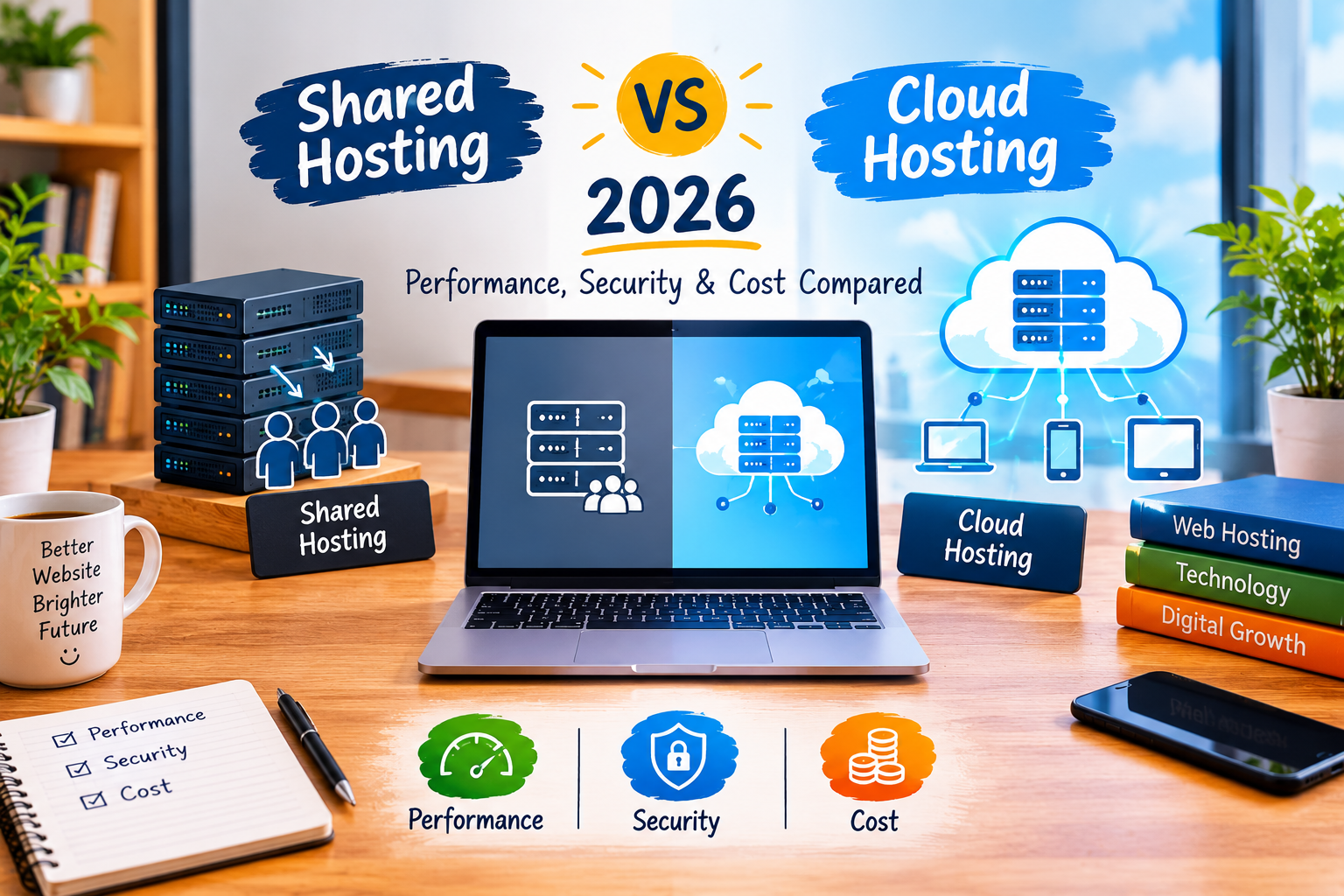
Cloud Hosting vs Shared Hosting 2026: Performance, Security & Cost Compared

Introduction: A Decision That Determines Your Website’s Success

In the contemporary era, selecting web hosting is an extremely crucial decision for the success of any website[cite: 1]. When you choose hosting for your website, you are essentially laying the very foundation of your online presence[cite: 1]. In 2026, as the internet becomes faster, more complex, and increasingly competitive, the performance, security, and scalability of a website depend entirely on the type of hosting you choose[cite: 1].

In today’s digital age, web hosting is no longer just a technical necessity—it has become a strategic pillar for your business’s success[cite: 1]. In a world where user attention spans are measured in a few seconds, the speed and availability of your website establish the users’ first impression of your brand[cite: 1].

In this detailed article, we will thoroughly explore every aspect of shared hosting and cloud hosting, compare them, and decide which hosting is the best choice for your website[cite: 1].


What is Shared Hosting? A Detailed Overview

Shared hosting, as the name implies, is a system where a single physical server is shared among multiple websites[cite: 1]. It can be compared to a room in a noisy hostel—you do get your own space, but you have to share plumbing, electricity, and internet with 200 other people[cite: 1].

In short, shared hosting is an economical solution where one physical server is divided among several websites, and each website receives a portion of CPU, RAM, and bandwidth[cite: 1]. Because many users utilize the same server, hosting companies can offer shared plans at very low prices[cite: 1].

This hosting operates on a system where the hosting provider distributes resources under the assumption that all websites will not work at their maximum capacity simultaneously[cite: 1]. That is why it is so affordable—you only pay for the resources you use on average, not for those you might need at maximum capacity[cite: 1].

The main benefits of shared hosting are:

  • Low Monthly Cost — The cheapest hosting option, which is best for beginners and limited-budget projects[cite: 1].
  • Beginner-Friendly — Anyone can build a website without technical knowledge[cite: 1].
  • Easy Setup — One-click installation and a user-friendly control panel[cite: 1].
  • Managed Server Maintenance — The hosting provider is responsible for server maintenance[cite: 1].

Disadvantages of shared hosting:

  • Limited Resources — CPU, RAM, and bandwidth are divided among all users; as a result, if another website uses too many resources, your website can slow down or even crash[cite: 1]. This is called the “Noisy Neighbor Problem”[cite: 1].
  • Security Risks — If one website is compromised, the risk of an attack on the entire server increases[cite: 1].
  • Limited Scalability — As your website traffic grows, shared hosting can become an obstacle[cite: 1].

What is Cloud Hosting? A Comprehensive Overview

Cloud hosting is a modern and more scalable method where your website does not rely on a single server; instead, it retrieves resources from a network of multiple virtual servers located in the cloud[cite: 1].

In short, cloud hosting is a system where multiple servers work together to provide you with resources as needed[cite: 1]. As highlighted in Bluehost’s report, cloud hosting pulls resources from multiple servers, which means if one server fails, another server immediately takes its place—this is called “Automatic Failover”[cite: 1].

Key features of cloud hosting:

  • Distributed Resources — CPU, RAM, and storage are derived from multiple servers, allowing performance to remain more stable[cite: 1].
  • Dynamic Resource Allocation — Resources expand and contract in real time according to traffic[cite: 1].
  • Automatic Failover — If one server fails, another server immediately takes over, making downtime zero[cite: 1].

According to Nipa Cloud’s 2026 report, cloud hosting allocates resources from multiple servers using virtualization technology, making it more stable and secure compared to shared hosting[cite: 1].

Main benefits of cloud hosting:

  • High Scalability — Resources can be increased or decreased in real time without any downtime[cite: 1].
  • Better Uptime — In the event of a server failure, other servers take over[cite: 1].
  • Strong Security — Resources are isolated, and modern monitoring systems are present[cite: 1].
  • Fast Loading Speed — Provides connections from the geographically nearest server[cite: 1].

Disadvantages of cloud hosting:

  • Higher Cost — The monthly fee is higher compared to shared hosting[cite: 1].
  • Technical Complexity — Some cloud hosting platforms require DevOps knowledge[cite: 1].
  • Pay-As-You-Go Billing — If not monitored, the bill can increase unexpectedly[cite: 1].

Performance Comparison: Which is Faster and More Stable?

Performance in Shared Hosting:

Performance in shared hosting is unstable because all resources are divided among multiple websites[cite: 1]. If one website consumes too many resources, all the rest can slow down[cite: 1].

This is where the “Noisy Neighbor Problem” becomes most prominent[cite: 1]. As an expert explained: “You live in a room, but you share plumbing and Wi-Fi with 200 other people. And if someone throws a big party down the street, all the hot water runs out and the Wi-Fi drops”[cite: 1].

Performance in Cloud Hosting:

Cloud hosting distributes the load across multiple servers, ensuring that loading times remain fast despite traffic spikes[cite: 1]. According to Nipa Cloud’s report, cloud hosting performance is more stable and faster than shared hosting because a vast network of resources is available[cite: 1].


Scalability: Which Can Keep Up with Growth?

Scalability in Shared Hosting:

Shared hosting is very limited in scalability[cite: 1]. Once your website exceeds resource limits, upgrading usually requires migrating to a VPS or Cloud Hosting[cite: 1].

Scalability in Cloud Hosting:

Scalability in cloud hosting is unlimited[cite: 1]. Resources can be increased or decreased in real time without any downtime[cite: 1]. This flexibility is particularly important for businesses that are growing rapidly or where traffic can spike unexpectedly[cite: 1].


Security: Which is More Secure?

Security in Shared Hosting:

Security in shared hosting is weak because multiple websites reside on the same server simultaneously[cite: 1]. An attack on one website can affect other websites as well[cite: 1]. According to Nipa Cloud’s report, if there is no proper protection at the structural level in shared hosting, a problem in one system can impact another system[cite: 1].

Security in Cloud Hosting:

Security in cloud hosting is much stronger because resources are isolated[cite: 1]. According to Nipa Cloud’s report, resources in cloud hosting are virtually isolated, making security stronger and preventing memory leaks from spreading[cite: 1].


Reliability and Uptime: Which is More Consistent?

Reliability in Shared Hosting:

Shared hosting relies on a single server[cite: 1]. A 99.5 percent uptime guarantee means you are accepting up to 43 hours of downtime annually—that is nearly two full days when your digital storefront simply disappears[cite: 1].

Reliability in Cloud Hosting:

Cloud hosting is designed for high availability[cite: 1]. Since multiple servers work together, hardware failure rarely causes website downtime[cite: 1].


Cost Comparison: Which is Cheaper and Which Offers More Value?

Cost of Shared Hosting:

Shared hosting is quite affordable[cite: 1]. Starting prices begin at $3.95 per month[cite: 1]. However, as revealed in a 2026 podcast, this low price can be an “optical illusion”—a $4 monthly bill can actually silently damage your business because you or your team spend 3 to 5 hours every month fixing server slowness[cite: 1].

Cost of Cloud Hosting:

The cost of cloud hosting is higher due to its superior infrastructure, but it is based on usage—you only pay for the resources you actually use[cite: 1].


When Should You Choose Shared Hosting?

Shared hosting is the best choice in the following situations[cite: 1]:

  • If you are a beginner — If you have just started your online journey[cite: 1].
  • Small personal websites or blogs — If your website has very low traffic[cite: 1].
  • Simple business websites — If your website only consists of company information[cite: 1].
  • Limited budget — If you want to save maximum costs[cite: 1].

When Should You Choose Cloud Hosting?

Cloud hosting is the best choice in the following situations[cite: 1]:

  • If your website traffic is unpredictable — Such as news websites or e-commerce stores[cite: 1].
  • If you are running an e-commerce site — E-commerce websites must stay online at all times[cite: 1].
  • If you are growing rapidly — If you will need more resources in the near future[cite: 1].
  • If you need high performance and 99.9% uptime[cite: 1].

Conclusion: One Decision, Two Paths

In 2026, the choice between shared hosting and cloud hosting depends on the nature of your website, traffic, budget, and future plans[cite: 1].

Shared Hosting is a cheap, simple, and beginner-friendly option best suited for small websites, personal blogs, and startup businesses[cite: 1]. This is where most people start their journey[cite: 1].

Cloud Hosting is a high-performance, highly reliable, and more scalable option suitable for growing businesses, e-commerce stores, and websites that demand optimal performance even during unexpected traffic spikes[cite: 1].

Remember: As 2026 experts advise, evaluate your website’s requirements, determine your budget, and select the option that best fulfills your current and future needs[cite: 1]. If you anticipate future growth, choosing cloud hosting right from the start can save you from losses and the headache of migration in the long run[cite: 1].

How Quantum Sensors Will Revolutionize Medicine

Quantum Sensors: The Revolutionary Medical Breakthrough Unlocking the Inner World of Cells

The journey of medicine has always been a quest for sight. First, we observed with the naked eye, then microscopes revealed the existence of cells, X-rays narrated the hidden stories of bones, and MRI scans unveiled the secrets of soft tissues. Yet, despite these extraordinary accomplishments, an unfulfilled dream persisted within medical science. We could observe the structural state of cells, but we lacked the means to comprehend their internal dynamics—the precise micro-temperatures, ongoing chemical reactions, or whether a silent pathology was establishing its hold deep within this microscopic realm. That dream is now turning into reality. Quantum sensors, operating on the extraordinary principles of quantum mechanics, are answering this eternal quest of medicine. This minute technology promises a monumental revolution, and we stand directly on its threshold.


What is a Quantum Sensor and Why is it Revolutionary for Medicine?

A quantum sensor is a device that utilizes the delicate principles of quantum mechanics—namely superposition and entanglement—to measure temperature, magnetic fields, and chemical alterations at microscopic scales with unprecedented precision. Its true strength lies in transcending the limitations of conventional sensors. Standard medical instruments typically record macro-level averages of matter or energy, whereas a quantum sensor operates at the single-molecule level. Imagine moving away from calculating average municipal statistics to measuring the temperature, light, and sound within individual households independently. In medicine, this capability allows us to detect diseases long before physical symptoms surface, capturing them in their earliest, most hidden states.


Monitoring the Cellular Microenvironment: A Realized Dream

In recent years, researchers have successfully adapted quantum sensors to operate within living cells. Scientists at Japan’s National Institutes for Quantum Science and Technology (QST) developed a novel Molecular Quantum Nanosensor (MoQN) capable of reading absolute temperatures and identifying radical signals inside active cellular environments. This sensor navigates into the cytoplasm and nucleus without compromising the integrity of the cell membrane. The research revealed that intra-cellular temperatures exceed ambient external temperatures, and distinct nuclear regions exhibit variations in temperature. This discovery adds a vital dimension to medicine, as micro-temperature changes serve as early indicators of cancer and other pathological shifts.

Advancing further, scientists at the University of Waterloo created a method employing a single molecule as a quantum sensor. By utilizing a specific organic molecule (trityl-OX063), they preserved its spin state delicate enough to maintain its quantum properties in complex environments. This technique offers higher sensitivity than traditional diamond-based quantum sensors because it can be placed significantly closer to its target. Consequently, it opens the door to reading the structure of individual proteins, paving the way toward pinpointing disease origins and designing targeted therapeutics.


Early Diagnostics and Unprecedented Precision

The most compelling promise of quantum sensors is ultra-early diagnosis. During testing scenarios, nanodiamond-based quantum sensors successfully identified viral presence two days earlier than standard gold nanoparticle tests. A two-day head start can prove decisive in curbing viral spread and initiating timely patient intervention. Beyond viral screening, quantum sensors hold immense potential for uncovering early oncological markers, neurodegenerative indications like Alzheimer’s and Parkinson’s, and subtle cardiovascular anomalies long before they manifest clinically.

Furthermore, quantum sensing technology is pushing the capabilities of conventional MRI. An international team working on the QuantuMRI project is integrating quantum sensors with standard magnetic resonance techniques to read deep biological parameters like tissue temperature, pH levels, and ion concentrations. This advancement enhances image resolution while yielding critical insight into chemical transformations taking place within diseased tissue. Similarly, nitrogen-vacancy (NV) center quantum sensors enhance sensitivity by 10-fold and resolution by 3.5-fold compared to standard magnetic induction tomography, making the detection of sub-millimeter tissue abnormalities possible.


Advanced Neuroimaging and Personalized Medicine

Quantum technology is poised to redefine neurological diagnostics. Conventional Magnetoencephalography (MEG) machinery is massive, costly, and requires liquid helium cooling systems. Quantum sensors based on Optically Pumped Magnetometers (OPMs) offer an effective alternative. These sensors operate at room temperature and can be integrated into lightweight helmet configurations, greatly expanding patient mobility and comfort. These helmet systems record extremely weak magnetic fields generated by neuronal electrical activity, offering revolutionary potential for diagnosing epilepsy, depression, and early-stage Alzheimer’s disease.

The future of healthcare centers on personalized medicine, tailoring treatments to an individual’s unique biological makeup. Quantum sensors will serve as a core enabler in this paradigm. By monitoring cellular processes at the quantum level in real time, clinicians can determine optimal drug formulations, precise dosages, and potential adverse reactions before administering treatment. Medicine will shift from being reactive to predictive, prioritizing early prevention over late-stage intervention.


Challenges and the Path Forward

The field of clinical quantum sensing remains in its developmental stages and faces notable technical hurdles. The primary challenge stems from the fragile nature of quantum states. Within the warm, moist, and dynamic environment of living cells, quantum states decohere rapidly. To address this, researchers are engineering novel stabilization methods—such as the team at Waterloo, who successfully extended molecular sensor coherence times by 60-fold. The second challenge involves translating these technologies from laboratory benchmarks to clinical settings, requiring robust collaboration between research institutions, biotechnology industries, and healthcare systems.


Conclusion: A New Dawn in Medicine

Quantum sensors represent more than just a technological upgrade; they introduce a new language to medical science. This language teaches us that diseases are not merely collections of external symptoms, but subtle disruptions within the cellular environment. Learning to read these signals enables early detection at the exact moment of pathological onset. We are entering an era where medical diagnostics will no longer rely on educated guesswork, but will clearly illuminate hidden biological processes. This is the transformation quantum sensors bring to medicine—a shift whose profound benefits future generations will experience in longer, healthier lives.

Fusion Energy: The Clean Power of the Future

Introduction

The history of humanity is inherently a history of the search for energy. Humans first utilized muscle power, then domesticated animals, later harnessed the flow of wind and water, brought forth steam to drive machinery, and eventually completed the Industrial Revolution through petrol and diesel. Yet each new power source carried a steep price. Smoke from coal and oil poisoned the atmosphere, nuclear energy delivered tragedies like Chernobyl and Fukushima, and renewable sources remain insufficient for total demand. Nevertheless, a singular hope endures at the intersection of scientific ambition and human necessity: fusion energy—the power that fuels the sun, illuminates the stars, and potentially offers an infinite solution to humanity’s material and energy needs. Fusion is not merely a scientific pursuit; it represents the confluence of survival, moral responsibility, and future aspirations. This journey through the landscape of fusion energy explores how science, philosophy, hope, and reality converge to reshape the world’s map.


The Mechanics and Promise of Fusion

Fusion is the process in which two light atomic nuclei—typically two isotopes of hydrogen, deuterium and tritium—collide under extreme temperatures and pressures to form a heavier nucleus, helium, releasing vast amounts of energy in the process. This mechanism has kept the sun and stars radiant for billions of years. Its significance rests on several core factors. First, fusion fuel is abundant; deuterium is plentifully available in seawater, while tritium can be synthesized from lithium, which is widely distributed across the Earth’s crust. Consequently, fusion energy is virtually unlimited. Extracting and fusing the deuterium present in oceans could power human civilization for hundreds of thousands of years, establishing fusion as a permanent solution to global energy demands.

Second, fusion represents a clean energy source. It produces zero carbon dioxide or greenhouse gas emissions. Furthermore, unlike nuclear fission, fusion generates vastly lower quantities of radioactive waste, which decays over decades rather than lingering as a hazard for thousands of years. Third, fusion is inherently safe. Should an operational anomaly occur within a fusion reactor, the process terminates automatically. Unlike fission reactors, where chain reactions risk runaway meltdowns, fusion is self-regulating; no catastrophic failure can trigger a widespread disaster. These attributes position fusion as a uniquely superior alternative to existing energy systems.


Scientific Origins and Technical Challenges

The concept of fusion emerged in the early 20th century as scientists sought to understand stellar energy mechanisms. In the 1920s, Arthur Eddington proposed that stars derive energy by fusing hydrogen into helium. By the 1950s, hydrogen bomb tests proved that fusion was physically achievable, though harnessing it for peaceful energy generation posed unprecedented engineering hurdles. Researchers faced two major challenges: reaching temperatures exceeding 100 million degrees Celsius, and containing the resulting superheated state of matter—plasma—without touching physical walls that would instantly melt. Two primary containment approaches emerged: the tokamak, a donut-shaped magnetic vessel that suspends plasma via powerful magnetic fields, and laser fusion (inertial confinement), which focuses high-intensity laser beams onto a tiny fuel pellet to rapidly compress and heat it to ignition thresholds.


Historic Milestones and Global Initiatives

A major milestone occurred at the National Ignition Facility (NIF) within the Lawrence Livermore National Laboratory, where researchers achieved net energy gain via laser fusion, producing more energy from the fusion reaction than the laser energy driven into the target. This breakthrough validated decades of theoretical work and catalyzed renewed momentum globally. Parallel efforts center on ITER (International Thermonuclear Experimental Reactor) in France, a collaborative tokamak initiative involving 35 nations designed to prove commercial and large-scale feasibility.

Concurrently, the Joint European Torus (JET) in the United Kingdom established operational benchmarks by sustaining fusion reactions for 5 seconds and yielding 59 megajoules of energy. In Asia, China’s Experimental Advanced Superconducting Tokamak (EAST) successfully sustained high-temperature plasma exceeding 100 million degrees Celsius for extended durations. These collective advancements highlight an accelerating international race toward viable fusion power.


Socio-Economic, Geopolitical, and Ethical Implications

The deployment of fusion energy promises to restructure global power dynamics. Resource-scarce nations lacking domestic fossil fuel reserves could achieve complete energy self-sufficiency, reducing geopolitical friction and conflict over oil and gas reserves. From an environmental standpoint, replacing fossil fuel infrastructure with fusion reactors would drastically curtail global carbon outputs, offering a path to stabilize climate systems for future generations.

However, significant ethical questions persist regarding technology access. Given the immense capital required to develop fusion reactors, equitable distribution remains a challenge. Establishing international frameworks is crucial to ensure that fusion power benefits developing nations rather than reinforcing global wealth disparities.


Integration with Renewable Energy Systems

Fusion energy is not intended to displace renewable sources such as solar, wind, and hydroelectric power, but rather to complement them. While renewables offer clean generation, their output remains intermittent due to weather and day-night cycles. Fusion provides reliable, continuous baseload power to bridge these gaps. A hybrid energy grid utilizing renewables alongside fusion generation ensures a stable, zero-emission power infrastructure.


Engineering Obstacles and Commercial Timelines

Transitioning fusion from laboratory conditions to commercial power plants presents ongoing engineering hurdles. Beyond plant construction, securing a stable supply of tritium requires advanced breeding technologies, such as lithium breeding blankets designed to regenerate tritium during reactor operation. Additionally, public perception requires clear differentiation between nuclear fission and the inherently safe, non-runaway nature of fusion reactions.

Projections indicate commercial fusion reactors could begin feeding power grids between 2035 and 2050. Private ventures—including Commonwealth Fusion Systems (CFS) and TAE Technologies—are attempting to accelerate these timelines by building compact, high-field magnetic confinement systems aimed at commercialization by the 2030s.


Conclusion: A New Horizon for Humanity

Fusion energy represents one of humanity’s most ambitious scientific endeavors. Unlocking unlimited clean power addresses fundamental environmental and resource constraints, enabling broader technological and space exploration pursuits. Realizing fusion requires sustained international investment, technical rigor, and policy coordination. Successfully mastering stellar energy on Earth marks a transformative shift toward a clean, sustainable future.